Showing posts with label local food. Show all posts

Wednesday, October 19, 2011

8 vital reasons to buy local food

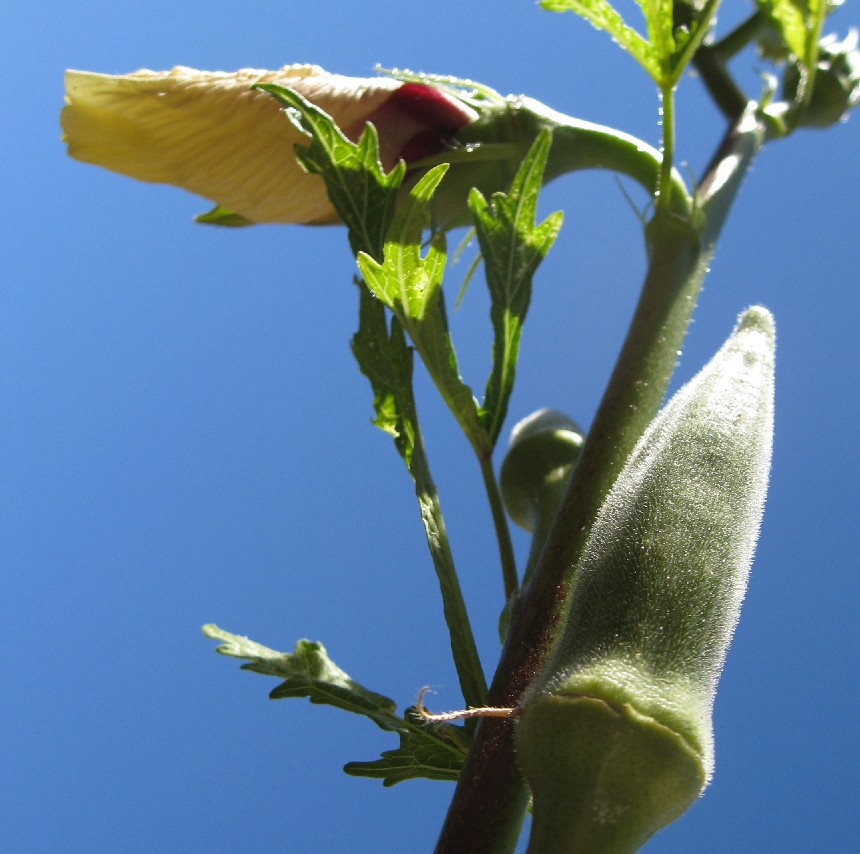
The last of our Carolina okra in the warm October sun. Photo: Sally Kneidel
Check out these 8 reasons to buy locally-grown food. Buying local helps not only the environment, but also our health and the welfare of farm laborers.

1. Local produce tastes better and is better for you; it's more likely to be picked at its peak, when it's ripe. Ripe fruits and vegetables have more flavor and higher nutritional value. Their nutritional value decreases every day post-harvest.

2. Buying local supports farming families in your own community, and keeps the money circulating in your own community. Buying from local farms in the off-season, when their selection and their customer-base may be reduced, is especially important in keeping these farms afloat financially.

3. Paying attention to what's available seasonally adds variety and interest to your diet, while at the same time supporting local farms. For my family, eating seasonal foods makes us feel more in touch with the changing seasons outside. Autumn means collards and broccoli, the last of the okra...and pumpkins!

4. Buying local reduces your carbon footprint. Food scientist Richard Pirog calculated that the average produce travels 1,500 miles in 3 days to reach his state. Farther than that if you live on the East Coast. Shipping food across the country uses 17 times as much fossil fuels and emits 5 to 17 times as much carbon dioxide as distributing food within a local system.

5. Food from small farms is much more likely to be raised without chemicals, protecting our health and wildlife habitat. Chemical fertilizers used in agribiz are made from fossil fuels. Farm machinery such as harvesters and combines use fossil fuels. As we all know, fossil fuels are the main driver of climate change.

6. Buying local supports the rural way of life. Hundreds of thousands of small farms have gone out of business in the last decade. Corporations have taken over food production, and rural lands are being sold to developers to accommodate urban sprawl.

7. Although the number of small family farms is decreasing due to consolidation into large industrial farms, the number of organic or sustainable farms operated by young entrepreneurs is increasing. The number of farmers markets in the U.S. has quadrupled in the last 7 years, to a total of 7,175 in 2011. In just the last year, the number of farmers markets has grown by 17%! By buying local, we can help this new wave of small farmers fight back against industrial agriculture.

8. When you buy local, you are choosing not to support industrialized farms that exploit immigrant and minority laborers. On many such farms, illegal immigrants are threatened with deportation when they complain about injuries. For more information on abuses to farm laborers, see any of these articles:

Injustice on our Plates: Immigrant Women in the U.S. Food Industry
Food Industry Abuses Workers as a Matter of Course
Labor in the Food System
The Cruelest Cuts
Blood Sweat and Fear
Throwaway workers

Keywords: local food agribusiness fossil fuels global warming seasonal food family farms chemical fertilizers healthy diet farmers markets sustainable food sustainable farms immigrants labor rights organic top 10 reasons

Monday, October 18, 2010

Review of new food film: "What's on YOUR Plate?"

This post now on Google News and on the syndicated BasilandSpice.com


Two young girls lead the way

I was asked to review the new DVD, "What's on YOUR Plate? The Film about Kids and Food Politics". The stars of the movie are two 11-year-old multiracial girls in NYC, Sadie Hope-Gund and Safiyah Riddle. The film documents the girls' quest to learn why American diets are often so unhealthy, and why our food travels an average of 1500 miles from farm to fork. Sadie and Safiyah were fantastic in their roles as curious young consumers. They were bright, confident, and completely natural in front of the camera. Great role models for other young girls, who will feel empowered by watching the two in action.
Sadie and Safiyah interviewed a variety of relevant experts: NYC school food executives, an MD specializing in cholesterol management, food author and activist Anna Lappé, a food-conscious diabetic, and Manhattan Borough President Scott Stringer. That was just for starters.

After investigating school lunches laden with with fat and empty calories, and the corporate origins of processed foods that fill our supermarkets, Sadie and Safiyah turned their focus to healthy alternatives.

I loved the diversity of local food providers in the film

For me, the exploration of solutions was the most interesting aspect of the movie. I admired the filmmakers' selection of people to represent the local-foods movement in NYC. Three who stood out for me were Maritza Owens of Harvest Home Farmers Markets in Harlem, a Spanish-speaking family of farmers (the Angels) in Goshen, NY, and the founders of Stanton Street CSA (Kevin Walter and Sasha Schulman). A CSA is an agreement that allows consumers to prepay a local farmer for an annual share of his or her produce. All of these people were involved in getting locally-grown produce directly to consumers in NYC. At least some of the produce was organic; it wasn't clear to me whether all of it was.
Organic okra in October. Photo: Sally Kneidel

Ninety percent of farmers need second jobs to support their families

So the movie in a very visceral way illustrated how to seek out and support local farmers and local vendors who provide healthy fresh vegetables. Most such people are barely making ends meet and desperately need community support, so the movie is valuable if it accomplishes nothing more than encouraging support of local farmers. I also appreciated the variety of cultures represented in the film, and the discussions about neighborhoods and demographic groups with little access to fresh produce. The girls' interview with the Manhattan Borough President addressed that problem specifically.

An excellent resource for families and educators

I was impressed with the movie and I applaud the efforts of everyone involved. I highly recommend it for families with children and as a tool for educators, especially educators of young people. In fact, the website of the film's distributor offers a 64-page curriculum and 3 study modules that go along with the DVD, entitled School Food, Health and Access, and Local Food.

Although I liked it, I wouldn't necessarily advise an adult foodie who's already knowledgeable about farmers markets and CSAs to seek out the film. And it's not a movie I would have chosen to watch purely for my own enjoyment or for information about food. However, as a food writer with fantasies about making a documentary, I might watch it again as an example of an extremely well-executed film about food. Sadie's mother, Catherine Gund, produced the movie and her expertise as a professional filmmaker was evident. There was not a dull moment, and I can easily imagine a class of 8th graders or 11th graders riveted to the screen during the entire film.

Wish it had mentioned the ominous impacts of livestock

As long as we're examining "what's on our plates", I was a tad disappointed that the documentary didn't address the merits of organic food more forcefully, and didn't mention the fact that Americans eat much more meat per capita than any other country. Our over-consumption of animal products has implications far beyond our health. The livestock sector has a huge impact on global warming - a fact well-documented by scientists worldwide. A recent paper published by Worldwatch Institute attributes more than 50% of greenhouse gases to the livestock sector. Although the film didn't get into environmental issues much, it could easily have incorporated both these issues in relation to health - especially given that both girls are vegetarians.

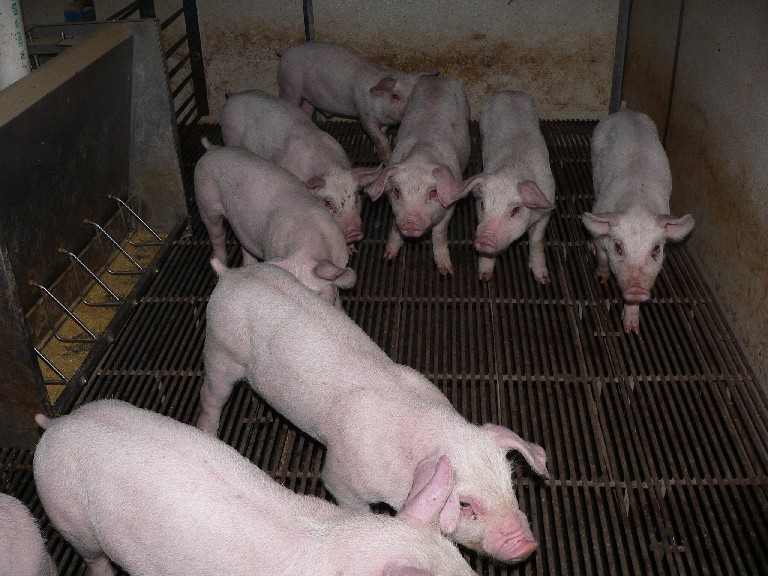
Hogs for a popular sausage brand, raised on a N.C. factory farm. Photo: Sally Kneidel

Despite omissions, the film is a powerful tool

There are advantages though to covering a few topics well rather than touching on everything. No question that Sadie and Safiyah covered a few topics with pizzazz and aplomb. "What's on YOUR Plate?" invites young viewers to boldly seek answers about their own school food and demand access to healthy produce. We all deserve fresh, local, and wholesome food.

Our books about how our food choices affect our health and the environment:

Sally and Sadie Kneidel. 2005. Veggie Revolution: Smart Choices for a Healthy Body and a Healthy Planet. Fulcrum Publishing.

Sally and Sadie Kneidel. 2008. Going Green: A Wise Consumer's Guide to a Shrinking Planet. Fulcrum Publishing.

Some of my previous posts about the effect of diet on health and the environment:

"Livestock account for 51% of annual worldwide greenhouse gas emissions"

"New study: meat impacts climate more than buying local"

"Less meat....smaller footprint"

"Is local food the greenest choice? New study says no"

"Earth Day: 3 things you can do"

"An apple? Bran muffin? or cold cereal? Top ten sources of easy fiber"

"10 hot tips for a green and energy-efficient holiday."

"Obama to fight consolidation of farms: good news for small farms and consumers"

"Smithfield blamed for swine flu by Mexican press"

"The virus is a swine flu and has its roots in North Carolina, the land of Smithfield"

"Tyson and Smithfield drooling over untapped profits abroad"

"Working in a turkey insemination factory"

"A tasty vegan meat substitute: Tofurkey kielbasa"

Key words: DVD documentary movie film review What's on your Plate Sadie Safiyah CSA farmers markets local food NYC Maritza Owens Stanton Street CSA Catherine Gund organic livestock sector Worldwatch

Thursday, May 14, 2009

Is local food the greenest choice? New study says no

Dairy cows' rear-ends: bad news for our climate.
Photo by Sally Kneidel

"Local" is the mantra in sustainable food these days. But should it be? Is eating locally-produced food the most powerful thing we can do to reduce our ecological "foodprint?"

A new study from Worldwatch Institute says no indeed. I love Worldwatch. They crank out study after study with lots of hard data, evaluating the environmental impact of various consumer choices. So useful! So fun to quote!

Don't get me wrong - I'm all in favor of local food. We definitely should support small-scale farmers in our own communities who are growing food organically and sustainably. For years now, I've been writing and speaking in support of them, on this blog and in our books and at various conferences.

There's no question that, all other things being equal, buying food grown nearby is better than buying food that's been trucked for long distances. Less transported food means fewer emissions and a smaller carbon footprint. But as Sarah DeWeerdt points out in this new Worldwatch article, we need to look at the whole production picture - not just how far food was transported from producer to market.

As it turns out, when we look at life-cycle analysis, a "cradle-to-grave perspective" on food products, food miles are "a relatively small slice of the greenhouse-gas pie," says DeWeerdt. In fact, according to a comprehensive analysis last year by Christopher Weber and H. Scott Matthews of Carnegie Mellon University, final delivery from the producer or processor to the retailer accounts for only 4% of the U.S. food system's greenhouse-gas emissions! Materials required for cultivation and processing must be transported too; this transport is considered part of the "upstream" miles and emissions. Such materials include fertilizer, pesticides, animal feed, etc. But the transport of these items, together with transport to market, still accounts for only 11% of the food system's emissions.

What's the source of all the other greenhouse gases associated with agriculture? Production. Primarily, production of livestock. Weber and Matthews from Carnegie Mellon found that a whopping 83% of food-related emissions occur before the food leaves the farm. Tara Garnett, in a recent analysis of a U.K. food system reached similar conclusions.

What you eat may matter more than where it came from

Numerous studies reviewed by DeWeerdt have found that livestock production generates a much higher volume of greenhouse gases than does plant production. Beef and dairy cattle are the worst culprits; DeWeerdt calls them "agriculture's overwhelming 'hotspots' " in terms of greenhouse-gas emissions. A group of Swedish researchers has calculated that meat and dairy account for 58% of that country's total food emissions. In Garnett's study, meat and dairy accounted for half of the U.K. food system's greenhouse gases. Garnett writes, "Broadly speaking, eating fewer meat and dairy products and consuming more plant foods in their place is probably the single most helpful behavioral shift one can make" to reduce food-related greenhouse gases. Weber and Matthews reached a similar conclusion: "No matter how it is measured, on average red meat is more GHG-intensive than all other forms of food. " The dairy industry, in their study, was the second-biggest contributor to greenhouse-gas emissions.

A large proportion of emissions associated with beef cattle and dairy cows are the greenhouse gases methane and nitrous oxide. Methane is 23 times more potent at trapping solar heat than is carbon dioxide; nitrous oxide is 296 times more potent (molecule per molecule). Methane comes from the rear-ends of ruminants such as cows. Both methane and nitrous oxide come from manure, especially the vast, open "waste lagoons" associated with factory farms.

Well then, just how much does food contribute to the planet's overall carbon footprint? I reported on that in a previous post. In 2006, the United Nations Food and Agriculture Organization published a live-wire of a paper entitled "Livestock's Long Shadow." According to that research document, livestock account for 18 percent of all greenhouse gas emissions. And here's the kicker - that's more than all forms of transportation combined! You can easily google that document for yourself. Just read the 3-page Executive Summary in Part I, which summarizes the the whole 400 page report.

After concluding that red meat and dairy are emissions hot-spots, DeWeerdt does go on to review the merits of buying local food. One clear advantage, which Sadie and I talk about in our presentations, is that local food is in general grown by small-scale farmers who are openly accountable for their treatment of the environment and their livestock. The farmers I know who sell food to their own communities welcome visitors to inspect their methods. This is a far cry from industrial producers who keep their exploitive and often abusive operations shielded from public view.

So buy local. But, if you want to contribute to a liveable planet for your grandchildren, eat low on the food chain too. And join me in a tip of the hat to Worldwatch for another fine study.

by Sally Kneidel, PhD

Sources:
Sarah DeWeerdt. Is Local Food Better? Worldwatch Institute. Accessed May 15, 2009.

Livestock's Long Shadow. United Nations Food and Agriculture Organization. Rome, 2006.

To see my primary post about Livestock's Long Shadow and about Weber & Matthews' research, click here

To see all my, Ken's, and Sadie's posts that mention Livestock's Long Shadow, click here

To see my favorite Worldwatch Institute document, Happier Meals: Rethinking the Global Meat Industry by Danielle Nierenberg, click here

Key words:: Worldwatch Livestock's Long Shadow meat industry local food red meat cattle dairy livestock greenhouse gases carbon emissions food carbon footprint foodprint Sarah DeWeerdt Weber and Matthews Matthews and Weber Carnegie Mellon

Friday, June 06, 2008

Shoestring Victory: Never enough space

Ricky's and my struggle to begin our microfarm was proving difficult at every turn. No materials. No space. No money. Somehow we'd managed to plow our field, make our potting mix... and now, finally, on a cool February evening, we filled nine 128-cell flats with seed. Dwarf Thumbelina Zinnias… Blue Scotch Kale… the names brimmed with promise. As I swept off the porch, Ricky went off in search of the watering can. She came back, lugging it full of rainwater.

Gingerly, she tipped it forward to water the first tender tray. Immediately, the spray-end fell to the ground, blasting a few cells of dirt with an undiffused jet stream of water. She looked at me reproachfully. “It’s broken!” she said in a tone of surprise.

“Oh, yeah…” I said vaguely. “It’s cracked, but you can just stick it back on there liiiike…. oh. Crap. I guess it really is broken.”

That night we watered the trays with mason jars. That worked until the dirt formed a hard crust from having thick layers of water poured over it. Then it was time to upgrade to a drugstore watering can for $1.29.

In addition to gentle watering, seedlings need steady, constant temperature and light. I kept remembering the farm I’d worked on: the warm, humid greenhouses with their automatic watering systems and gently humming fans. How could I replicate that here?

In the back yard, we have a small hoop house that one of my housemates built out of a pallet and some scrap plastic. It does a great job of converting lukewarm spring sunshine into steamy heat – at least while the sun’s out. But I wasn’t confident it would protect delicate seedlings at night, or when the temperature got below freezing.

Meanwhile, Ricky was in the process of moving into a house under construction. All her possessions were in boxes; her house was full of tools and sheetrock dust. She couldn’t take the seed trays.

No, it was up to me. I prowled through the house with an appraising gaze. South facing windows… wait, that just might work!

I ran to the kitchen for an armful of plastic shopping bags and old newspapers. Then to my bedroom. Clearing off my desk, nightstand, and dresser – all within reach of the south-facing windows’ light – I spread out bags and covered them with a thick layer of newspaper. With a little rearranging, I fit five trays on my dresser, three on my desk, and one on my nightstand. I didn’t really need my lamp. My alarm clock could go on the floor. Perfect!

Well. Maybe not perfect, but functional at least. Hopefully. Would anything grow?

by Sadie Kneidel

Thursday, May 29, 2008

Shoestring Victory: Getting started with no materials

February came all too fast this year. In North Carolina, the second month of the year brings the first breath of the coming spring. But instead of my usual delight at the warm weather, I felt only rising alarm. Ricky and I had yet to plant the first seed on our microfarm, and we were already drastically behind schedule.

Sometime in the winter, when our urban farming plan had all been charmingly theoretical, Ricky and I had drafted a lovely schedule of when we would seed start, direct seed, and transplant multiple successions of each crop. Starting about four months ago, we would have stacked delicious layers of manure, grass clippings, compost and other organic treats on our growing beds, building up healthy, fertile soil. The first week in February, we would direct seed beets, radishes and peas into this receptive medium. We would start kale, chard, and lettuce in seed trays, for imminent transplanting.

Reality found us, instead, facing a large muddy expanse of sopping wet mystery soil. Gobs of dead weeds surfed amongst chunks of oozy clay. “I don’t understand this,” said Ricky, squeezing a handful of gloppy soil between her thumb and forefinger. “It’s coarse and grainy, like sand, but it holds water like clay. What does that even mean?”

As she fumed, I was purposefully scooping soil samples from all over the field into a bucket. I mixed them together and spooned a bit into a small cardboard box addressed to the Agricultural Extension in Raleigh. They offered free soil testing; within a week or two, we’d know exactly what we were dealing with. We hoped.
____

That night, just before dusk, Ricky and I reconvened on my front porch. Our neighbor, Dave, sat on his own porch, peaceably reading a book in a lawn chair like normal people do. At our house, the porch furniture had been relegated to a heap in the corner. In its place stood a 55-gallon barrel we’d bought for $10 from a man we found on craigslist, a couple plastic buckets we’d found in the yard, and a mound of ingredients I’d picked up from Southern States.

“Here we go!” We high-fived geekily before beginning to heap bucketfuls of peat moss, compost, sand, lime, bone meal, cottonseed meal, and vermiculite into the barrel.

“Is that good?” said Ricky, peering into the barrel. “Should we add more lime?”

“I dunno,” I said, shrugging. “This chart doesn’t make any sense. I mean, how the hell are we supposed to tell how many cubic meters this is? Whatever. It’s probably fine. Let’s stir it up.”

Confidently, I thrust our famous three-tined pitchfork into the mess and gave it a shove. It barely budged. I tried again. I flipped a little arc of compost in the air, leaving the other 99.9% of the barrel’s contents untouched. Never mind. “Um, how about we roll it?” I suggested.

We clamped on the lid and cautiously tipped the barrel on its side. It crashed onto the porch with a resounding thump. Out of the corner of my eye I saw Neighbor Dave jump startledly in the air, casting an alarmed look our way. Heretofore he had been doing a good job of ignoring our antics, but he now watched with a doubtful gaze as Ricky and I bent over together and shoved the barrel down the porch steps.

Bam! Bam! Bam! The barrel slammed down to the front walk. Grunting, we shoved it awkwardly forward. Picking up speed, it rolled enthusiastically toward Dave’s truck, parked at the curb in front of our house.

Wordlessly, Ricky threw herself between the barrel and the truck. It slammed into her shins, eliciting a sharp cry. I leaped hastily to her side of the barrel and shoved it back towards the house.

Back and forth. Around and around. Upside down, right side up. Panting, we maneuvered the barrel to its final resting place in front of the privet. Despite the cool February night, I flung my sweatshirt on the ground. Dave was still watching, his mouth slightly open in intrigue. I undid the lid and we both peered tiredly inside. Frankly, I was astonished to see a mixture actually resembling a perfect potting mix. “Holy nut!” I exclaimed with relief. “It worked!”

Now all we had to do was actually plant some seeds. And make them grow and stuff.

by Sadie Kneidel

Monday, May 12, 2008

Shoestring Victory: Finding space in unexpected places

I was at a Superbowl party when we found the land for our microfarm.

I was at my friend Jared’s house, paying a little attention to the game and a lot of attention to the snack table when my phone rang. It was my gardening partner, Ricky. I couldn’t hear a word she was saying over the din of the game and my friends. “Guess what!” she shouted. “Mumble mumble Fred? Mumble dates? He said mumble mumble yard! And he wants to get a goat! Mumble awesome?”

“Yeah!” I shouted back. “I mean, what? Did you say a GOAT?”

All my companions looked away from the game to stare at me, annoyed or curious. “Who has a goat?” Catherine asked eagerly.

“Sorry,” I muttered. “Hold on a second, Ricky.”
___

The grapevine had come to our aid. Ricky and I had been looking for land to launch our urban farming initiative for weeks, months. With both of us tied to rental houses and with nary a penny to our names, buying land was out of the question. We’d petitioned a neighborhood church for use of their vacant field, to no avail. Friends in another neighborhood had offered us use of their spacious yard, but it was a good ten-minute bike ride away. Realistically speaking, I knew that was far enough to keep my lazy self from going over there as often as I’d need to. Weeding my own back yard was hard enough.

Nonetheless, it was getting anxiously close to spring. We were on the verge of accepting their offer, when a man named Fred heard from his girlfriend Liz who heard from her daughter Isabell who heard from her friend Jonathan who heard from his girlfriend Ricky that we were looking for some space. Fred had a large lot, agricultural ambitions, and not much spare time. Better yet, he lived just a few blocks away. A perfect match.

The next morning we were tromping through waist-high weeds behind Fred’s house. He wasn’t home, but according to Ricky, who had heard from Liz, it was definitely totally fine for us to do this. I was on the phone again. “Do you know anyone with a tiller?” I asked all my gardening friends. “Where can I find a tractor in the city?”

Our social network came to the rescue again. I heard from my boyfriend Matt who heard from our neighbor Early who heard from our other neighbor Cheryl that Cheryl’s stepdad Max was bringing his tractor to town next week, from his farm in the neighboring county, to till the neighborhood community garden. As it turned out, Cheryl was eager for him to do our lot too. “Doing two sites makes it slightly less ridiculous to bring the tractor all that way,” she pointed out. “The community garden is about the same size as the tractor itself.” Good point.

Saturday morning I biked down Florida Street with Max following me on the tractor. We proceeded grandly to Fred’s back yard, holding up low riders who rolled down their tinted windows to get a better look at what was going on.

Fred, Cheryl and I stood with some curious children and watched as Max’s tines sank into the tufty clay soil. Slowly, strip after strip of weedy field gave way to chunks of raw red clay. “Wow…” breathed one of the children.

I didn’t want to sound like a greenhorn, but I felt the same way. There was no turning back now. Would we really be able to make it as growers?

by Sadie Kneidel

Hoes: Tools of the revolution

Do the words "revolution" and "agriculture" seem about as connected as "economical" and "gas prices"? If you think so, you're not alone. Agriculture in the U.S. has the reputation of dull, dumb labor: overalls, sweat, conventionality. Certainly, many of the so-called innovations in recent years have taken a lot of the wisdom out of cultivation. Genetically-modified seeds, chemical additives, and gas-powered machinery have slayed the delicate art of coaxing healthy plants from them soil. But if you've ever helplessly watched your houseplant wither, or stuck some seeds in the ground to no avail, you probably know that growing things is trickier than it seems.

What's more, as corporations buy up the rights to our food supply, the know-how of growing your own food is becoming a revolutionary weapon. Seed companies like Monsanto are taking over the rights not only to seeds themselves, but to time-honored farming practices such as saving seed. Heirloom seeds, the old strains that give us magical produce like purple potatoes and blue corn, are going exctinct as farmers are forced to buy corporate seed. [This recent article in Vanity Fair gives a good overview of the situation. Our new book, Going Green, explores this issue in depth.]

Not only does this diminish the diversity of foods available for us to eat, but it threatens our food supply - with fewer varieties of a certain crop, that crop is more susceptible disease or climate change. The creation of a new seed bank in Norway shows how serious scientists consider this problem.

My local paper reported last week that in the past year, egg prices are up 30%, milk and cheese 13%, and wheat, corn and soybeans 60-80%. As gas prices steadily climb, these price hikes are not likely to decline any time soon. Americans now spend a record high 57 cents out of every dollar on survival essentials - food, housing and transportation. As food costs claim more of our budget, there are two options: buying lower quality food to save money, or getting food from another source. Learning to grow our own food is a way to feed our families high quality, nutritious food at very low cost. When supper comes from the back yard, the grocery shelf fluctuations are a lot less scary. Check out this short video about a Pasadena family who has taken this approach to heart.

This isn't as revolutionary as it seems. Folks in their 60s and older remember "victory gardens" from World Wars I and II. "Victory gardens," says Wikipedia, "were vegetable, fruit and herb gardens planted at private residences… to reduce the pressure on the public food supply brought on by the war effort. In addition to indirectly aiding the war effort these gardens were also considered a civil "morale booster" — in that gardeners could feel empowered by their contribution of labor and rewarded by the produce grown. Making victory gardens became a part of daily life on the home front."

Reread the same paragraph, replacing "war effort" with "impending economic and environmental crisis." Victory gardens revolutionized American morale at the beginning of the last century. It's high time victory agriculture does the same thing now.

For more information, these longer documentaries are fascinating:
The Real Dirt on Farmer John - The hilarious true story of a midwestern farmer adapting to difficult times.
The Power of Community: How Cuba Survived Peak Oil - A fascinating look at how one country survived the unimaginable: the loss of gasoline. The average Cuban lost 20 pounds. And that's just the beginning…
The Greenhorns - A documentary about the new generation of young farmers changing the face of American agriculture.

by Sadie Kneidel

Monday, May 05, 2008

Girls on tractors: a new era of agriculture?

Yesterday morning the tables turned.

Now, pretty much every Saturday morning finds me at the farmers' market. That's not unusual. Maybe it's the hot coffee, or perhaps it's the 15 kinds of goat cheese available for sampling, but I have the uncanny knack of waking up on Saturdays without my alarm clock, if I know that's where I'm going. Before I go to bed, I tell myself, "You can have plantain spring rolls for breakfast if you wake up in time!" It works like magic.

But this Saturday was different. Don’t get me wrong, I was still eating spring rolls - but as shoppers strolled around our neighborhood's fledgling Peoples' Market, I sat firmly planted in a seat. Behind a table. My table. My gardening partner Ricky sat beside me, making change and small talk as I slid our products closer to the front of the table, freshened the herbs, and rearranged the flowers. I kept expecting someone to cry, "Hey you! You're not a farmer! What are you doing?" But they didn't. They just bought our plants and smiled.

This trimphant morning was the result of four months of planning, working, and waiting. A cold afternoon in January, Ricky and I sat at my kitchen table with two mugs of tea and a stack of heirloom seed catalogues. "I know it's crazy," I said, "but we have to try this. I had this moment this afternoon... I was watering the collards in the back yard, and I was filling the bucket from our rain barrel, and all of a sudden I was awash in this wave of… like… pure joy. A wave of… I don't know how to describe it. Realness. Like, at that moment I was my authentic, unadulterated self. I don't get that feeling from anything else I do, besides gardening and farming. And maybe cooking."

Ricky grinned at me, half-teasing, half-understanding. "I know exactly what you mean," she said. "I get that feeling too. Very occasionally. When I'm doing something that I really believe in, that feels right and true to me. Like I'm taking a step towards I believe in."

"God, we're so cheesy," I groaned. "Anyone who is listening to this conversation is barfing on themselves right now. But seriously. I don't know how else to say it except that I feel really called to try this. And I want to give it a shot."

And so, armed with almost no materials, we set off on our revolution. With less than $300, two shovels, one hoe, and a three-tined pitchfork, we devised a plan. Our goal: agriculture in the city. Reaquainting ourselves and our community with food and agriculture, the fundamental skill of survival. Providing fresh produce for our working-class neighborhood; earning a living by following our passion; severing our community's dependence on agribusiness; protecting our food supply by propagating heirloom seeds; mitigating our environmental footprint by growing local food.

Back in January, I couldn't decide if we were insane or brilliant. (Sometimes it's a fine line.) We had no land. No money. No machinery. No tools. No model, no plan, no infrastructure. And yet… we did have supportive friends. A needy community. Passion and excitement, and a habit of getting things done in the most bootleg manner possible.

Today, in May, I'm still not sure whether we're nuts or not. Our project is still in its infancy. Our finances are still most definitely in the red. But we're learning a lot - about plants, but also about our community and ourselves. In the past few months I've read a lot of books and watched a lot of documentaries about revolutionary agriculture. Those stories, the knowledge that other nutty people are out there doing the same thing we are, has made me realize the importance of telling our story. Over the next few months, I hope to catch readers up on the first few months our urban agriculture adventure, and keep you updated as the summer unfolds. There's drama in the dirt.

By Sadie Kneidel

Friday, September 21, 2007

5 Easy Ways to Healthy Hearts and a Clean Planet


Packing my lunch and fixing dinner are two parts of the day that I try to do as fast as possible. With the job I have right now, efficiency at home has become a high priority. But I'm also not getting enough exercise.


So I try to pick foods that meet three goals: heart-healthy, low-calorie, and low environmental impact.


Here are 5 tips to meet those goals:


1.
For a midmorning snack, eat grapes or a locally-grown apple. A whole cup of grapes has relatively few calories. Weight-Watchers gives a cup of grapes only one point, compared to two for a banana. (The more points, the more calories in their rating system. A slice of pizza has 7 points, for example.)

2. For lunch, eat a cup or a cup and a half of low-fat or fat-free plain soy yogurt, fortified with calcium. If you prefer dairy yogurt, choose non-fat plain organic yogurt. Just before eating: slice a banana into it, add a tablespoon or so of walnut pieces, and sprinkle with cinnamon. Very low-fat and low-calorie, with a lot of calcium and protein, and very tasty. Soy yogurt and organic dairy yogurt have a lower environmental impact than regular yogurt. I buy 32-oz tubs of yogurt and that makes about 3 lunches.


3. Use olive oil instead of oils with saturated fats. Only olive oil and canola oil are high in monounsaturated fats. The FDA has approved this statement for use by olive oil manfacturers: "Eating about 2 tbsps of olive oil daily may reduce the risk of coronary heart disease due to the monounsaturated fat in olive oil." Among the worst oils for your heart are palm oil and cottonseed oil. In between somewhere are corn oil, sunflower, and safflower oils. More about that in our book Veggie Revolution.


4. Cook vegetables in the microwave. Just put sliced vegetables on a plate, fresh or frozen, and put it into the microwave. Zap for one minute and test, then add additional minutes as needed. Some people put a teaspoon of water on the plate for steam, but I don't. This is really fast way to cook frozen broccoli. And microwaves are by far the most energy-efficient appliance for cooking food. When possible, buy locally-grown veggies. Less transport means fewer greenhouse gases. Plus, buying local foods usually means you're supporting small farmers in your own community.


5. Eat whole grains, such as whole-grain rice, whole-wheat bread, barley, quinoa, or wheat berries (chewy and very good). Eating 2 and half servings of whole grains every day is associated with a 21% lower risk of heart disease than eating close to none. Be aware that "Wheat Bread" or brown bread is not necessarily whole-wheat. Look for a bread bag that says "100% Whole-Wheat." And check the fiber. Some 100% whole-wheat bread has twice as much fiber as other brands. While you're at it, look for organic breads and grains. These are not only healthier for you, because they lack pesticides, but they're also far healthier for wildlife, for fields and forests, and for our rivers and streams where agricultural chemicals wind up.

Key words:: easy foods, heart healthy, low calorie, local food, monounsaturated, whole grain, calcium. soy

Saturday, April 28, 2007

Beware the justice of nature, says Wendell Berry

The words below from Wendell Berry inspire me. Wendell is the author of The Unsettling of America and many other books, and a guru of local food, ethical farming, and community. This passage was printed in the bulletin of a Charlotte church as part of their Earth Day celebration. A group of about 10 from the church flew out to Kentucky last month and met with Wendell for a couple of hours in his home, to hear his thoughts on environmental activism and local food. I wasn't in the group, but a couple of my friends were and they told me about the conversation. Wendell observed that environmental activism might be best practiced as a half-time job, to keep some sense of balance and well-being. He advised the visitors to spend some time every day doing something that brings "glee." To him, that might mean watching a nesting bird feed its young, or lying in the grass beside a pond enjoying the sights and sounds of the pond wildlife.

Here's what the church bulletin reprinted:

"And so, graduates, my advice to you is simply my hope for us all:
Beware the justice of Nature.
Understand that no amount of education can overcome the innate limits of human intelligence and responsibility. We are not smart enough or conscious enough or alert enough to work responsibly on a gigantic scale....
Learn, therefore, to prefer small-scale elegance and generosity to large-scale greed, crudity, and glamour.
Make a home. Help to make a community. Be loyal to what you have made.
Put the interest of the community first.
Love your neighbors - not the neighbors you pick out, but the ones you have.
As far as you are able make your lives dependent upon your local place, neighborhood, and household - which thrive by care and generosity - and independent of the inudstrial economy, which thrives by damage.
Find work, if you can, that does no damage. Enjoy your work. Work well."

Wendell Berry, "The Futility of Global Thinking"

Keywords:: Wendell Berry community neighbors local food right living