Showing posts with label AIDS. Show all posts

Wednesday, October 28, 2009

New studies confirm that circumcision saves lives in Africa


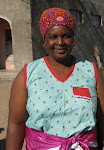
 The Swazi chief in the center, surrounded by her family and, on the far right, our friend Sonny

I was intrigued by a story I saw in Science News recently about circumcision and its effect on HIV. Africa has been impacted by HIV more than any other continent. In 2007 and 2009, my husband and I were in South Africa and Swaziland, two of the hardest hit countries. We had the priviledge of visiting the chief of a rural village in Swaziland.  We were welcomed into her family's small round hut with its earthen floor, along with our friend Sonny who lives and works nearby. I asked the chief, with Sonny as translator, how Swazi life had changed during her lifetime (the chief was an older woman). She wouldn't say much, except how the younger generation won't eat traditional foods any more, wanting junk food instead. But as we were leaving, she stopped us outdoors and asked us to pray for her village. She asked us to pray that someone will find a solution to HIV, which is devastating her village and her country.  The sad look of hopelessness on her face haunted me as I read the Science News article last week.

In Swaziland, 22% of adults are infected with HIV. Life expectancy used to be 57 years; now it's 31 years. In the year 2007 alone, 10,000 Swazis died of AIDS.  The country has 56,000 AIDS orphans.  And so on....you get the picture.  In South Africa, the impact of AIDS has been so great that the country's population has stopped the rapid expansion characteristic of most African countries. Life expectancy in 1995 was 64; in 2005 it was 49. See International Data Base (IDB) for more population data.

So what's being done?  As far as research, some big strides have been made, and some of that research has to do with protection offered by circumcision.

In humans, the three most common sexually-transmitted viral diseases are HIV, genital herpes, and HPV (human papillomavirus). All three are incurable.

But all three are are less likely to be transmitted when a male is circumcised.

Earlier studies have shown that male circumcision reduces the risk of acquiring HIV by up to 60%.

Another article, published this year in the New England Journal of Medicine, reports that circumcision also provides partial protection against both genital herpes and HPV. This study, funded by Bill & Melinda Gates and the NIAID, involved 3,393 Ugandan males ranging in age from 15 to 49, all of whom wanted to be circumcised and none of whom had herpes. Half the males were circumcised right away, and half had the procedure deferred for two years. After the two years, the earlier-circumcised volunteers were 1/4 less likely to have genital herpes and 1/3 less likely to have a dangerous form of HPV. Because circumcision provided only partial protection, the researchers cautioned that it "should not be considered a full shield."

Even so, the partial protection could have a major public health benefit, says the director of the National Institute of Allergy and Infections Diseases, Dr. Anthony Fauci.  Human herpes ulcers make a man more vulnerable to HIV infection. Dr. Fauci says that circumcision not only reduces the incidence of HIV infection outright, but by protecting against genital herpes, circumcision increases the protection against HIV infection.  This is a significant finding: in Kenya, where 4/5 of the people infected with HIV are also infected with genital herpes, says Dr. Robert Bailey of the University of Illinois at Chicago.

Although much of the research centers on protection of men, women benefit too. Yet another study in South Africa reports that circumcised men are 1/3 less likely to have a dangerous form of HPV that can cause cervical cancer when transmitted to female partners.

A research team in Kenya is nearing publication of their study of circumcision's effect on STDs. One scientist in the research team has said the results show similar effects to the already published studies.

An Overwhelming Game Changer

Says Dr. Judith Wasserheit of the University of Washington, "I think this trio of trials is certainly a landmark in prevention, not only of HIV but of these other sexually transmited infections. These new data really are a game changer."

Dr. Thomas Quinn of Johns Hopkins University says that the medical evidence of long-term benefits to male circumcision "is now overwhelming."

Good News, But Is It Being Used?

Unfortunately, this information is so far having little effect on the transmission of these diseases in Africa.  According to www.avert.org, an international AIDS nonprofit, "only one clinic in South Africa currently offers free male circumcisions, with public facilities only offering the service for medical reasons. The government is reviewing evidence on circumcision, but has yet to issue further guidance on the practice."

One hindrance toward progress in South Africa is the amazing quantity of misinformation among the general public about the transmission of HIV.  While in Johannesburg, we read an editorial in the city's major newpaper about the common folklore regarding how a man can determine whether he has HIV or not. If he has sex with a virgin and she does not become infected, then he can assume he is uninfected himself.  If he has sex with a virgin, and she does become infected, then she must be a witch. I hate to relay such nonsense about a country I love passionately, but every country has its own damaging dogma. My sympathy in this situation lies with the young girl who's used as meaningless litmus paper, and perhaps paying with her life.

Some of the schools we visited in South Africa showed us herb gardens where they're growing herbs to prevent or treat HIV. Beet root has been a well-known "cure" in the country for years, even promoted as such by the government in earlier years.  I'm not aware that any herbs or plants offer protection against this disease.

My hope is that Bill & Melinda Gates or NIAID will invest some of their billions into building free circumcision clinics and distributing information about real-life diagnosis and protection - as well as promoting development and distribution of the promising new vaccine, which appears to offer protection to 1/3 of those who receive it (see NY Times article cited below).

And if you're wondering whether to circumcise your own newborn son, it appears that doing so could offer him some protection against some STDs. Although condoms could most likely provide a higher degree of protection, without the cutting that some object to.

Sources:
1. Nathan Seppa. "Many benefits to circumcision: Operation in males fends off three common viral STDs." Science News, April 25, 2009.

2. Nathan Seppa  "Defense Mechanism: Circumcision averts some HIV infections."  Science News,  October 29, 2005

3. Aaron, A.L. et al. "Male Circumcision for the Prevention of HSV-2 nad HPV Infections and Syphilis." New England Journal of Medicine, March 26, 2009.


4. Averting HIV and AIDS. "HIV and AIDS in South Africa." http://www.avert.org/aidssouthafrica.htm

5. Donald G. McNeil Jr. "For First Time, AIDS Vaccine Shows Some Success," New York Times, Sept. 24, 2009. http://www.nytimes.com/2009/09/25/health/research/25aids.html

6. International Data Base.  http://www.census.gov

Key words:: circumcision HIV AIDS Africa Swaziland STDs

Wednesday, March 18, 2009

Pope values religious dogma over African lives?

On his way to Africa, Pope Benedict XVI said Tuesday that condoms are not the answer to preventing more HIV infections on the continent. "On the contrary," he said, "it increases the problem."

According to Victor Simpson of the Associated Press, three-fourths of all AIDS deaths worldwide in 2007 were in sub-Saharan Africa. By all accounts, an HIV pandemic is raging throughout this impoverished continent and has been for some time.

Pope Benedict has an alternate solution in mind, something he feels will be more effective than condoms. He and his senior Vatican officials advocate fidelity in marriage and abstinence from premarital sex as the key weapons in fighting HIV/AIDS.

Well, that's a nice little fantasy that might do well in a Cinderella cartoon. In reality though, such a recommendation shows a ludicrous "head in the sand" lack of awareness of the social structure in many impoverished African nations, and the collapse of social structure as their resources vanish. In the deep poverty that characterizes much of sub-Saharan Africa, women often lack autonomy in their relationships, marital or premarital. Men decide when, where, how often, and with whom sexual relations occur.

In cultures that have been disrupted by the depletion of natural resources, men often move to urban centers seeking work, leaving wives or girlfriends behind, and beginning new relationships in the informal settlements outside of cities. Men pick up HIV in these settlements and carry it back to their villages on their return visits. If they can afford to return.

Women in urban centers, less employable than men, may live in desperate poverty. Unable to farm in the city, they may be forced into the sex trade to feed their children.

On top of these dynamics are traditional spiritual beliefs, held in some areas, that a man's immortality is secured through the number of progeny he leaves behind, which can encourage promiscuity among men who are forced from their homelands in search of work.

So now the pope says, let's suggest to them that they suddenly return to a society where they are all able to remain with their nuclear family, and practice monogamy throughout adolescence and adulthood.

Does the pope read books? Does he watch documentaries? Is he in any way in touch with reality? I think I'll try to mail him "Darwin's Nightmare," an excellent documentary about the collapse of normal cultural life around Tanzania's Lake Victoria, after the collapse of the lake's ecology.

Rebecca Hodes with the Treatment Action Campaign in South Africa said if the pope is serious about new HIV infections, he will focus on promoting wide access to condoms. "Instead, his opposition to condoms conveys that religious dogma is more important to him than the lives of Africans," said Hodes. Hear, hear. Well said, Ms. Hodes. If only the pope were listening, or interested.

What do you think, readers?

Source: Victor Simpson. March 18, 2009. On Africa trip, pope says condoms won't end AIDS. Associated Press.

Keywords:: pope AIDS HIV Africa condoms

Thursday, October 25, 2007

Breast Feeding Gets a New Review in Sub-Saharan Africa


HIV, the virus that causes AIDS, is epidemic in Africa. In some sub-Saharan countries, 35% of the population is infected. Every year, as many as 700,000 babies are infected with the virus during pregnancy, birth, or breast-feeding.

For 15 years, professional health organizations such as WHO have recommended that infected women in developing countries avoid breast-feeding to prevent transmission of the virus through breast milk.

But recent research from physician Nigel Rollins of the University of Kwazulu-Natal in South Africa has turned that recommendation on its ear.

There's no question that breast-milk can transmit the AIDS virus. But the realities of formula feeding in developing nations complicate the picture.

In Africa, women often don't have access to clean water or can't afford enough formula, and often wind up supplementing the formula with breast milk. And sadly, a mixed diet of formula and breast feeding turns out to be the worst possible recipe for AIDS transmission, worse than either alone.

That's because unclean water in the formula often irritates the lining of the baby's gut or makes sores in the baby's mouth - so that during subsequent breastfeeding, the HIV virus has an easier path into the baby's blood.

Rollins and his research team studied more than 2,700 women for 7 years, and published the results in the March 31 edition of the medical journal, Lancet. They found that babies fed only breast milk had only a 4% risk of infection from the ages of 6 weeks to 6 months. This was less than half the risk of HIV infection of babies fed with breast milk plus formula or other milk products. In addition, babies fed solids as well as breast milk were 11 times as likely to become infected as were breast-only babies. The solids were also found to inflame a baby's immature digestive system, thereby facilitating transmission of the virus through the gut wall into the baby's bloodstream.

Formula-feeding in developing nations has other problems as well. Babies fed formula or solids before 6 months of age don't get the full nourishment and disease-fighting benefits of breast milk, while being exposed to increased risks of gastrointestinal diseases and malnutrition from unclean water.

"We've reached remarkable consensus among experts" that exclusive breastfeeding is best during the first 6 months for babies of HIV-infected mothers in poor countries, says Jean Humphrey of the John Hopkins School of Public Health, speaking from Zimbabwe. "The issue really now is what to do after 6 months." WHO currently recommends that mothers wean babies rapidly after 6 months to avoid prolonged exposure to mixed feeding.

Source:
Carolyn Barry. "The Breast Solution: Nature's nutrition keeps HIV at bay." Science News. September 22, 2007. Some sections of the blog post above are direct quotes from the Science News article.

Keywords:: breastfeeding, breastmilk, breast feeding, breast milk, HIV, AIDS, Africa, malnutrition, infant nutrition

Wednesday, March 07, 2007

Africa: the race for dwindling resources

Cheetah photo courtesy of www3.nationalgeographic.com

Any given evening of channel-surfing is likely to turn up a show on African wildlife....hyenas scuffling over a zebra carcass, meerkats socializing, cheetahs chasing antelopes. We're fascinated with African wildlife. Of course we are. No other continent offers the variety of "charismatic megafauna" found on the African savannah. Troll the internet for safari prices, and you'll find many African packaged trips for $7,000 to $12,000 per person. But Americans continue to pony up because we're entranced by the grandeur and drama of African wildlife.

Yet Africa is a continent in serious crisis. It's the only continent where poverty is actually increasing. More than 70% of the world's HIV infection is in sub-Saharan Africa. The AIDS epidemic, as you probably know, has killed so many people in Africa that a large proportion of households in sub-Saharan Africa are missing one or both parents. In many cases, a child or granny is the head-of-household.

The disruption of family and village life by the AIDS epidemic has profound ripple effects throughout African culture and the natural world. Traditionally, rural villages have relied heavily on forest resources, especially fuelwood, but also plants for traditional medicines, and bushmeat, or wildlife for the dinner table. In some countries in sub-Saharan Africa, more than 90% of household energy is from locally gathered wood. For centuries, villagers have harvested only dead branches, and the wood has come from the village commons - the communally owned area around each village. The harvesting of fuelwood, bushmeat, medicinal plants, wood for fencing and household implements and furniture, etc. has been at sustainable rates.

But families without a breadwinner tend to increase their use of forest resources, because such resources are free. In addition, the human population in east Africa is projected to double in the next 55 years or so. So the demand for forest resources is increasing for a number of reasons. The use of many of these resources, including trees for fuelwood, has surpassed sustainable levels. In South Africa, some studies have shown that at current rates of use, fuelwood resources will be exhausted within 15 years.

The demand for arable land is also increasing as human populations increase. Conflicts between the needs of human communities and the needs of wildlife for habitat grow more pressing. Many rural villages depend on livestock for their livelihoods. In east Africa - Kenya and Tanzania - predation on livestock can be a major source of friction between wildlife conservation efforts and community interests. In southern Africa, elephants often damage farm fields, and even invade villages, sometimes killing people. The Nature Conservancy is working with the African Wildlife Foundation toward solutions to these problems. The key lies in finding incentives for local Africans to preserve natural resources, including wildlife, and in finding ways that African villagers can improve their livelihoods through resource conservation. That is a major challenge for the century that lies before us.

On June 5 of 2006, Voice of America's Cole Mallard interviewed Adam Henson of the African Wildlife Foundation on the conflict over the use of natural resources by humans and wildlife in Africa, and solutions that AWF is trying to facilitate. Following is a link to the audio of that interview (less than 2 minutes long) and a written summary of the interview from the website of the African Wildlife Foundation.

Humans vs. Wildlife: How Serious Is the Race for Resources?

The audio of the interview

"Tonight, in our continuing series on the competition for resources between humans and wildlife, these questions: How serious is it? Can a compromise be worked out? Voice of America English to Africa reporter Cole Mallard put those questions to Adam Henson, a program manager with the African Wildlife Foundation in Washington, who said Human-wildlife conflict is one of the most serious threats facing conservation efforts in Africa today. Our mission is to work with the people of Africa to insure the wildlife and wildlands of Africa will endure forever through strategies that create incentives for conservation and opportunities for people to earn a living.

"He says the cause of the conflict is competition for resources between wildlife and people, such as water and grazing areas. Henson says the kind of conflict depends on the region. For example, in East Africa, lions and other large predators devastate livestock, whereas in Southern Africa, large elephant populations raid crops, destroy houses and sometimes kill people.

"He says the way to deal with conflict is through prevention and mitigation. He says prevention involves improving livestock husbandry, and containing of livestock from predators such as lions. He describes mitigation as financial compensation for economic loss resulting from destructive wildlife behavior.

"Henson says it's not the role of the Africa Wildlife Foundation to promote or oppose sport hunting or other similar activities, but to promote a wide range of economic activities that are derived from conservation and that create benefits for local people that can, in the end, sustain livelihoods and, most importantly, protect conservation of wildlife."

Sources:
African Wildlife Foundation. June 8, 2006. "Humans vs wildlife: How serious is the race for resources?" http://www.awf.org/content/headline/detail/1279

Twine, Wayne. "The rural fuelwood crisis: sifting through the myths." Kruger Park Times. October 4, 2004.

Keywords: Africa African wildlife sustainable resource use natural resources elephants predation tribal villages rural livelihoods conservation incentives compensation AIDS grannies AIDS orphans bushmeat traditional medicines fuelwood AWF Nature Conservancy