Thursday, March 15, 2007

African forests at risk

Africa lost nine per cent of its trees between 1990 and 2005, according to a UN survey of the world's forests.

This represents 0ne half of the earth's forest loss, this despite the fact that the continent accounts for just 16 per cent of the earth's forests.


Photo credit: Greenpeace/Kate Davison
In a news release this week (13 March) by the UN Food and Agriculture Organization, it was reported that the highest losses occurred in countries with the densest forest cover: Angola, Cameroon, DRC, Nigeria, Sudan, the United Republic of Tanzania, Zambia, and Zimbabwe, all in Africa.

Although forests are obtaining greater political support and commitment in Africa, the report says "implementation and law enforcement remains weak in most countries".

In Latin America and the Caribbean, home to a quarter of the world's forest cover, 0.5 per cent of forest was lost each year between 2000 and 2005 ― up from a rate of 0.46 per cent in the 1990s. The conversion of forest to agriculture was the leading cause of deforestation.

Costa Rica, however, reversed its forest decline in the 1990s subsequently realizing a growth of of almost one per cent of forest area expansion per year. But the extent to which this is related to reductions in agricultural land or innovative policies is not clear, warns the report.

The survey highlighted positive action in Latin American countries. This includes a large increase in forest area designated for biodiversity conservation, indicating that countries are taking steps to prevent loss of primary forests ― those undisturbed by human activities.

According to the report, the region is "among the world leaders in innovative approaches to international cooperation on forest issues". Methods used include forming networks to fight fires and improve the management of protected areas.

The Amazon Treaty Cooperation Organization ― whose member countries comprise Bolivia, Brazil, Colombia, Ecuador, Guyana, Peru, Suriname and Venezuela ― and the Central American Commission on Environment and Development are among those cited in the report.

Forested area increased in Asia between 2000 and 2005 ― largely due to China's investment in tree plantations, which offset high rates of forest clearing in other regions.

Related links::
State of the World's Forests 2007 report
UN Food and Agriculture Organization
The Amazon Treaty Cooperation Organization

Keywords:: RESOURCES FORESTS AFRICA LOGGING PLANTATIONS CHINA

April 14, 2007: National Day of Climate Action

Photo courtesy of peacecorpsonline.org

Here's your chance to meet other global-warming activists in your own community.

The website Step It Up! 2007 is promoting a "national day of climate action" on April 14, 2007. Great idea, and a desperately needed action. Already 920 events are planned in 50 states. The Step It Up 2007 website has an interactive map that allows you to locate the event closest to your home.

Step It Up! is pushing Congress for an 80% reduction in carbon emissions by the year 2050, which is just a 2% reduction per year.

Here is Step It Up's explanation of why they've chosen this particular goal. From their website:

"The latest science tells us that temperatures are increasing faster than expected, and the results are showing up in melting ice caps, intensifying storms, and rising sea levels. America's foremost climatologist, NASA scientist James Hansen, has said that we have just a few years to start reducing carbon emissions, and he's endorsed our goal of 80% by 2050. That won't prevent global warming - it's already too late for that - but it may be enough to stave off the most catastrophic effects.

"While few experts have said explicitly 'we need to reduce carbon emissions 80% by 2050,' we're sticking to this message. Here's why: Scientists have resisted in nearly every case prescribing policy because they don't want to enter the political realm. That's why the Intergovernmental Panel on Climate Change (IPCC) and others won't suggest policy, but rather leave it up to legislators to do the dirty work. That said, Jim Hansen, the Stern Report, the UN Framework Convention on Climate Change (UNFCCC), a number of European countries, the State of California and others (including the new USCAP business-environmental partnership) have either suggested or explicitly referred to 80% carbon cuts by 2050 as a solution commensurate to the scale of the problem.

"And it's possible. The cost of renewable energy is falling fast. New conservation technologies, like hybrid cars, are becoming more available. Many Americans are starting to switch already, but only leadership from Washington can allow this transformation to happen fast enough. And if we begin to get our house in order, then we can play some role in helping China and India steer away from cataclysm as well.

"There are no guarantees we'll succeed. But if we act ambitiously, we have reason to hope."

Step It Up's website (link above) also has suggetions for how to plan an action near you, if there isn't one already planned, and other steps you can take to reduce our contribution to climate change. Americans are right now the world's biggest producers of the greenhouse gases that are warming the planet. But we're not helpless to stop it.


Keywords:: global warming, day of action, step it up, Congress, 80% reduction, greenhouse gases, carbon emissions, climate change

Wednesday, March 07, 2007

Africa: the race for dwindling resources

Cheetah photo courtesy of www3.nationalgeographic.com

Any given evening of channel-surfing is likely to turn up a show on African wildlife....hyenas scuffling over a zebra carcass, meerkats socializing, cheetahs chasing antelopes. We're fascinated with African wildlife. Of course we are. No other continent offers the variety of "charismatic megafauna" found on the African savannah. Troll the internet for safari prices, and you'll find many African packaged trips for $7,000 to $12,000 per person. But Americans continue to pony up because we're entranced by the grandeur and drama of African wildlife.

Yet Africa is a continent in serious crisis. It's the only continent where poverty is actually increasing. More than 70% of the world's HIV infection is in sub-Saharan Africa. The AIDS epidemic, as you probably know, has killed so many people in Africa that a large proportion of households in sub-Saharan Africa are missing one or both parents. In many cases, a child or granny is the head-of-household.

The disruption of family and village life by the AIDS epidemic has profound ripple effects throughout African culture and the natural world. Traditionally, rural villages have relied heavily on forest resources, especially fuelwood, but also plants for traditional medicines, and bushmeat, or wildlife for the dinner table. In some countries in sub-Saharan Africa, more than 90% of household energy is from locally gathered wood. For centuries, villagers have harvested only dead branches, and the wood has come from the village commons - the communally owned area around each village. The harvesting of fuelwood, bushmeat, medicinal plants, wood for fencing and household implements and furniture, etc. has been at sustainable rates.

But families without a breadwinner tend to increase their use of forest resources, because such resources are free. In addition, the human population in east Africa is projected to double in the next 55 years or so. So the demand for forest resources is increasing for a number of reasons. The use of many of these resources, including trees for fuelwood, has surpassed sustainable levels. In South Africa, some studies have shown that at current rates of use, fuelwood resources will be exhausted within 15 years.

The demand for arable land is also increasing as human populations increase. Conflicts between the needs of human communities and the needs of wildlife for habitat grow more pressing. Many rural villages depend on livestock for their livelihoods. In east Africa - Kenya and Tanzania - predation on livestock can be a major source of friction between wildlife conservation efforts and community interests. In southern Africa, elephants often damage farm fields, and even invade villages, sometimes killing people. The Nature Conservancy is working with the African Wildlife Foundation toward solutions to these problems. The key lies in finding incentives for local Africans to preserve natural resources, including wildlife, and in finding ways that African villagers can improve their livelihoods through resource conservation. That is a major challenge for the century that lies before us.

On June 5 of 2006, Voice of America's Cole Mallard interviewed Adam Henson of the African Wildlife Foundation on the conflict over the use of natural resources by humans and wildlife in Africa, and solutions that AWF is trying to facilitate. Following is a link to the audio of that interview (less than 2 minutes long) and a written summary of the interview from the website of the African Wildlife Foundation.

Humans vs. Wildlife: How Serious Is the Race for Resources?

The audio of the interview

"Tonight, in our continuing series on the competition for resources between humans and wildlife, these questions: How serious is it? Can a compromise be worked out? Voice of America English to Africa reporter Cole Mallard put those questions to Adam Henson, a program manager with the African Wildlife Foundation in Washington, who said Human-wildlife conflict is one of the most serious threats facing conservation efforts in Africa today. Our mission is to work with the people of Africa to insure the wildlife and wildlands of Africa will endure forever through strategies that create incentives for conservation and opportunities for people to earn a living.

"He says the cause of the conflict is competition for resources between wildlife and people, such as water and grazing areas. Henson says the kind of conflict depends on the region. For example, in East Africa, lions and other large predators devastate livestock, whereas in Southern Africa, large elephant populations raid crops, destroy houses and sometimes kill people.

"He says the way to deal with conflict is through prevention and mitigation. He says prevention involves improving livestock husbandry, and containing of livestock from predators such as lions. He describes mitigation as financial compensation for economic loss resulting from destructive wildlife behavior.

"Henson says it's not the role of the Africa Wildlife Foundation to promote or oppose sport hunting or other similar activities, but to promote a wide range of economic activities that are derived from conservation and that create benefits for local people that can, in the end, sustain livelihoods and, most importantly, protect conservation of wildlife."

Sources:
African Wildlife Foundation. June 8, 2006. "Humans vs wildlife: How serious is the race for resources?" http://www.awf.org/content/headline/detail/1279

Twine, Wayne. "The rural fuelwood crisis: sifting through the myths." Kruger Park Times. October 4, 2004.

Keywords: Africa African wildlife sustainable resource use natural resources elephants predation tribal villages rural livelihoods conservation incentives compensation AIDS grannies AIDS orphans bushmeat traditional medicines fuelwood AWF Nature Conservancy

International council of the 13 indigenous grandmothers

Women are gaining influence as leaders throughout the world fighting for peace, justice, the environment and civil society.


In this program, we visit with three eloquent members of the International Council of Thirteen Indigenous Grandmothers.

Listen to the programThe Council is a global alliance of elder women healers who represent more than 900 years of collective wisdom and traditions. The women come together to speak in one voice, with one very simple, yet urgent message: we must take care of our Mother, the Earth, for the next seven generations.

This Women's Desk program is a special collaboration with the Women Rising Radio Project, Lynn Feinerman and Crown Sephira Productions.

Featuring::

Rita Pitka Blumenstein of the Yupik nation practices plant and energy medicine. She is on the staff of Anchorage's South Central Foundation Traditional Healing Clinic; Flordemayo is a Mayan curandera, or healer, and serves on the board of the Institute of Natural and Traditional Knowledge in New Mexico; Beatrice Long-Visitor Holy Dance is an elder in the Native American Church, a sundancer and a health worker with the Lakota Oglala people.

Program Producer: Lynn Feinerman
Senior Producer: Tena Rubio
Guest Host: Sandina Robbins
Mixing Engineer: Stephanie Welch

Keywords:: INDIGENOUS SEVENTH GENERATION GRANDMOTHERS TRADITION EARTH

For more information::

The International Council of Thirteen Indigenous Grandmothers
The Center for Sacred Studies
P.O. Box 745 Sonora, CA 95370
209-532 9048; info@grandmotherscouncil.com
www.grandmotherscouncil.com
www.forthenext7generations.com

Tuesday, March 06, 2007

Tardy report on climate change is long overdue

Later than the latest homework assignment, more inadequate than the most half-hearted school project, the US’s upcoming climate change report is expected to disappoint climate scientists around the world.

The report, required by the United Nations Framework Convention on Climate Change, was due to the UN no later than January 1, 2006. Yes, 2006. Nonetheless, it is currently still under review by the White House Council on Environmental Quality.

According to the Council, the fourteen-month delay has been the result of an exhaustive review process. Skeptics, however, beg to differ. Rick Plitz, director of Climate Science Watch and a former senior associate of the federal Climate Change Science Program, hypothesizes that the postponement is largely because “the administration is reluctant to make an honest statement about likely climate change impacts on this country.”

This reluctance is rather understandable, given the degree of action that an honest assessment would necessitate. The UN’s own report, released last month, stressed more harshly than ever the drastic need for a significant worldwide reduction in greenhouse gas emissions. Although the US ratified the report, along with 112 other nations, the administration has yet to appropriately address the gravity of this news. The US’s current emissions policy calls for limiting the nation’s rate of increase to 19% – which still allows emissions to increase from 7.7 billion tons in 2000 to 9.2 billion tons by 2020.

This slowed rate of increase is simply not enough, according to Washington’s own Climate Institute. “We really need to be seriously reducing emissions, not just reducing the growth rate, as the president is doing,” says Michael MacCracken, the Institute’s chief scientist.

It’s easy to understand why the administration, and indeed, the American public, is hesitant to admit the decisive stance that is truly needed. After all, the greatest sources of greenhouse gases are coal, oil, and natural gas – the very fuels that support almost every aspect of the comfortable American lifestyle. Acknowledging the gravity of the true need for change is going to require a serious policy change from the government and citizens alike.

Both the U.S. Climate Change Science Program and the Climate Science Watch offer continued monitoring of the report’s progress, as well as further information on climate change in the political arena.

By Sara Kate Kneidel

keywords:: global warming, climate change, UN report, US greenhouse gas emissions

Friday, March 02, 2007

Birds Plan their Future Menus, Scientists Say

Western Scrub Jay photo courtesy of Arizona Game & Fish Division

Researchers say that Western scrub jays are the first animals to unambiguously meet the criteria for "planning" behavior. Scientist Nicola Clayton of the University of Cambridge in England reported her observations in the Feb. 22 issue of the journal Nature. The birds in the study were seen to store food in places where they were previously stuck with nothing to eat. They also were observed to cache certain kinds of food in spots where that kind of food had not been available in the past.

In humans, planning is the result of imaginary time travel. Whether the birds were engaging in imaginary time travel can't be known for sure. But behavior that seems to result from imaginary time travel has never been reported for any animal in research journals before now.

To set up the study, Clayton and her colleagues housed the jays in suites with two annexes. On some mornings, the researchers confined a bird in one of the annexes for 2 hours with no breakfast. On other days, the researchers kept the bird in the other annex, where food was available. So the birds knew which annex had food and which didn't.

For the experiment, the researchers served whole pine nuts to the jays. The birds could eat as many as they liked and cache the rest in either annex. The 8 birds in the test cached most of their nuts in the no-breakfast annex.

In a second experiment, the researchers offered the birds peanuts in one annex and kibble in the other. The birds cached more of each food in the annex that lacked it.

The researchers say the results show that the birds planned what they would have available to eat for future meals.

Other scientists - Sara Shettleworth of the University of Toronto and Thomas Suddendorf of the University of Queensland - concur with Clayton that the results show strong evidence of planning, much more so than previous behavioral experiments.

This behavior is different from, say, a dog running to the door at the sound of a car in the driveway, which is simply a response to a conditioned stimulus. It is also different from a cat lying next to a chipmunk hole, which may seem to be planning but is actually a hunt already in progress.

This behavior is not the same as a squirrel hiding nuts, either, which can be explained as just instinctive behavior with no imaginary reflection on how satisfactory the nuts will be at a future time.

The caching by Western scrub jays does seem to show "imaginary time travel" to events that could be weeks away - events which require some menu-adjustment in order to satisfy the choosy diners.

Source: S. Milius. "Bird plans." Science News, Volume 171. February 24, 2007.

Keywords: bird behavior bird intelligence scrub jays bird research planning behavior food cache

Activists Succeed in Blocking One New Coal Plant


Dear Global Warming Activists,

You’ve probably heard the news by now that the NC Utilities Commission yesterday approved only ONE 800-megawatt unit for Cliffside. Thanks to all of you for attending the hearing, providing public and written comments, getting friends and family to submit comments, writing letters to the editor, talking to people about the importance of moving away from fossil fuels and toward clean energy and energy efficiency, and all the other ways you contributed to making sure the Utilities Commission heard the public’s concerns. I am convinced that without the large turnout at the hearing in Charlotte and the many comments sent in, that the Commission would have no doubt approved both proposed units. So thank you for your part in this critical campaign to fight global warming pollution here in North Carolina!

There are several silver linings in this decision:

1) Duke stated under testimony that it would be cost-prohibitive to build just one unit. In the paper this morning Duke Carolinas President Ellen Ruff, stated that “We have to look at where we are.” She said they could choose to build more natural gas plants. So we will keep you posted on the latest developments.

2) Duke still needs to get an air quality permit from the state Division of Air Quality. In terms of concerns over air quality and global warming, we have better legal standing with the DAQ than with the UC on these issues. There may be a public hearing on this.

3) We now have the Charlotte Observer, the Raleigh News and Observer and the Winston-Salem and Durham papers on record as opposing Cliffside.

4) We also have the attention of the state legislature which is considering legislation that NC adopt a RENEWABLE ENERGY PORTFOLIO STANDARD that would require utilities to have a certain percentage of their energy portfolio met through energy efficiency and renewable energy sources.

ACTION: We need folks to thank Rep. Becky Carney, Rep. Martha Alexander and Rep. Drew Saunders for co-sponsoring House Bill 77 which would ensure that at least 20% of North Carolina’s energy demand is met through efficiency measures and clean, renewable sources by the year 2020. Contact your specific legislator in the house and ask them to support this bill.

To find out your legislators and their contact info, follow this link from our website: http://www.clean-air-coalition.org/action_center.htm

FOR YOUR READING: You should know that Susan Tompkins of Charlotte is a member of the N.C. Legislative Commission on Global Climate Change. She is a wonderful advocate on our behalf. I’ve attached a Summary of Proceedings from their meeting on February 22. Please read over these and get familiar with the types of policy changes we need to support to reduce our carbon emissions in North Carolina and thank Susan when you see her!


CALENDAR ITEM:
Mark your calendars for Thursday, March 22 to attend a presentation on climate change at Davidson College by Dr. Tim Flannery, Scientist and author of The Weather Makers: The History and Future Impact of Climate Change, 7:00 p .m, Duke Auditorium, http://www.theweathermakers.com

Thanks again for using your voice to help the Carolinas Clean Air Coalition restore clean and safe air to the Charlotte region!

Best regards,

June Blotnick
Executive Director
Carolinas Clean Air Coalition
402 W. Trade Street, Suite 104
Charlotte, NC 28202
(704) 342-9161

www.clean-air-coalition.org


Keywords: coal plant coal plants coal-fired power plants activism activists clean air coalition cliffside victory North Carolina Utilities Commission Duke Energy global warming public hearing Duke Power activist success air quality asthma air pollution mercury Tim Flannery weather makers

Thursday, February 22, 2007

Midwest coal rush

North Carolina is not alone in our struggle to block the construction of new coal-fired power plants. Far from it. The Illinois chapter of the Sierra Club recently posted the article below about the "Midwest coal rush." The article explains why coal is making a comeback in spite of considerable health and environmental costs. To find the original article go to the Illinois Sierra Club Home Page, then scroll down and click on "Clean Air", then click on "Midwest Coal Rush". Or read it right here:

Midwest Coal Rush

Dirty coal is making a comeback...

For three decades the devastating pollution costs associated with burning coal for energy has prevented the construction of new coal power plants. American innovation has helped clean the air while meeting US energy demands with clean energy choices such as energy efficiency, wind, solar and clean-burning natural gas.

All that progress is now at risk. With a sympathetic White House, relaxed environmental protections, and large state and federal subsidies, dirty coal is staging its most serious resurgence in thirty years. 114 new coal-burning power plants are in various stages of planning and permitting in the US today. Most of the plants are proposing outdated coal combustion technology which would create the largest new source of global warming pollution in the US.

Almost one half of the new coal plants are proposed in the Upper Midwest – with a record 12 plants in Illinois! These new coal plants, some of which are already being permitted and funded with taxpayer subsidies, will not replace the old existing coal plants but instead will compound our existing pollution woes. These “new” coal plants emit essentially as much carbon dioxide – the principal cause of global warming -- as a 1950s-era coal plant.

What Is At Stake?

Our Health: Coal-burning power plants are the single largest source of mercury, a potent neurotoxin contaminating our nation’s waterways. The Illinois Department of Health has issued a fish consumption advisory due to dangerous levels of mercury in every waterway in the state. US EPA estimates that one in six women in America has levels of mercury in their bodies that presents a risk of permanent brain damage to her child in utero.

Coal-burning power plants also cause the fine soot pollution that blankets our cities. This fine soot bypasses the lung’s natural defenses and becomes lodged deep in the lungs where it causes asthma attacks, lung cancer, heart attacks, and even premature death. The Midwest already has its share of air quality alert days – more coal plants will only mean more dirty air days.

Our Economy: Investing in dirty old coal technology closes the market to expanding clean energy opportunities in the Midwest. Modern clean energy technologies, such as energy efficiency and wind power, are viable solutions to meet future energy needs in the US. The Midwest has an exciting opportunity, with its abundant wind and biomass resources, to become a leader in the 21st century energy market. Midwest wind energy alone could meet 25% of America’s electricity needs and create thousands of additional jobs in manufacturing, installation and maintenance of clean energy systems.

Our Future: Leading experts agree that the single largest threat facing our planet and our children’s future is global warming. A 2004 Pentagon-commissioned report states that “ because of potentially devastating consequences, the risk of abrupt climate change … should be elevated beyond a scientific debate to a U.S. national security concern.” The proposed Midwest coal plants would add billions of tons of new carbon dioxide to the air, making them the #1 US threat to global warming, at a time other states and 140 nations are taking action to reduce their global warming pollution.

Stop New Dirty Coal NOW To Build A Clean Energy Future

Building dirty coal-burning power plants is a giant step in the wrong direction, leading us into a future of at least 50 more years of additional air pollution and increased health risks. The Midwest needs to become a leader by banning new dirty coal-fired power plants and instead investing in safe and clean energy technology. Clean energy alternatives should be considered before any other technologies. [end of article]

To learn more about the fight against coal's resurgence, go to the Energy Justice Network. Among other things, they have an interesting map of the nation's coal supply regions. I begin to understand why the Southeast has a hefty proportion of the nation's existing coal-fired power plants.

To register your objection to Duke Energy's proposed new Cliffside coal plants in North Carolina, e-mail the NC Utilities Commission with a brief statement a
t
vance@ncuc.net (Subject heading: Cliffside or Docket E-7, Sub 790). Ask the Utilities Commission to reject Duke's construction request, and include any negative comment about coal. Send it by Weds February 28 if you can, although that decision date may wind up being postponed (at the request of several concerned legislators). You don't have to be a resident of NC to object. We'll all pay the price for the 11 million tons of carbon dioxide that these new NC plants will generate every year.

Thanks for any e-mails. For more about the struggle in NC against the mighty Duke Energy, which has its tendrils deep into local government and local corporations, see previous posts on this blog. More will be forthcoming.

Keywords: coal coal-fired power plants Duke Energy midwest coal rush Illinois Sierra Club map of coal supply largest source of global warming mercury brain damage asthma

Wednesday, February 21, 2007

How to Have a Green and Eco-friendly Wedding

Using potted plants is one way brides and grooms can minimize waste
and "go green" on their wedding day


I try to shop for second-hand and recycled goods when possible, whether it's clothes, furniture, books, cars, whatever. I make the effort partly to save money, but also for environmental reasons. Let's face it, Americans are huge consumers. We use 25% of the world's resources and energy, yet we have only 5% of the world's population. It's not sustainable.

In this vein, big and elaborate weddings have always been a puzzlement to me. They seem to me the ultimate in extravagance and waste. All that money spent in one day - when instead the couple could put the money toward a lengthy vacation, or a house down-payment. The average wedding costs $25,000 to $30,000! I could travel for a year on that. Ken and I got married in my parents' living room. I wore a dress that my brother made for the occasion; Ken wore a borrowed jacket. Our two dogs were our attendants. They sat very quietly and attentively while the remarks were made. The whole thing probably cost $200, or less. Even that, to me, seemed extravagant at the time.

So I was pleased when I saw the other day in the NY Times two articles about "green weddings." What a great idea! A Feb 11 article by Mireya Navarro, "How Green Was My Wedding", gives lots of ideas about how to have a greener wedding. One couple in the article plan a "zero waste" wedding for 250 guests. It will include compostable plates and utensils, organic and fair-trade certified food, locally brewed beer and organic wine and wedding rings that are "100% reclaimed recycled ecologically responsible gold." In lieu of gifts, the couple are asking guests to sign up for conservation projects, or to donate to environmental groups.

The second NY Times article, by Matthew L. Wald ("Making High-flying Guests Fuel Efficient") describes how to purchase carbon credits to offset the environmental impact of flying. A $9.95 pass for a 1000 mile trip goes toward developing green sources of energy, such as wind power. This is useful information for green-wedding planners, since travel is the biggest-impact component of a wedding. It's also useful for vacation travelers such as myself. The passes are available from TerraPass, directly or through Expedia, the travel website.

The "How Green Was My Wedding" article refers to several wedding professionals and companies who are offering eco-friendly wedding options, such as OrganicBouquet.com which offers organic flowers, and Portovert.com, a magazine devoted to eco-friendly weddings. The editor of Brides magazine says the interest in green weddings has blossomed to include vegan menus, halls that recycle, caterers who use locally grown ingredients, and decorating with potted plants that can be transplanted. The Feb-March issue features a planning guide for a green wedding.

It sounds good! These weddings will still probably cost plenty. But the significance of these trends is that people are trying. Awareness is increasing. The established authorities on the subject are recognizing changing consumer values. That's exciting! After all, the power rests with consumers ultimately. Markets will provide what we demand. A green wedding can be a gateway to an eco-friendly lifestyle and environmentally-conscious parenting. One step at a time...toward a sustainable future.

Keywords: green wedding organic flowers brides magazine how green was my wedding eco-friendly wedding ecofriendly wedding vegan menu consumers portovert organic bouquet minimize waste carbon credits TerraPass impact of travel

My plea to the Utilities Commission to take a stand on climate change

Drought is a growing problem worldwide due to changes in rainfall patterns
from greenhouse gases, mainly CO2


Dear Commissioners:
I'm writing regarding Duke Energy's proposed Cliffside plants.
You as utility commissioners have so much power. You have the power to leave our fields and forests viable and productive, for the thousands of generations of humans who will follow us on this planet. If we ruin our atmosphere and continue to change the world's climate, the rest of humanity from here until the end of our species will have their survival choices limited by what we did and didn't do.
Already, in sub-Saharan Africa, the rainy season has changed substantially due to global warming. Their rainy season is too short. When the rain finally comes, it falls in torrents, eroding fields. Lakes are shrinking, mountain snowcaps are receding. Their crops are failing, and soon, agriculture around the world will be similarly impacted.
What will people eat in the year 2100 and 2200 and 2300, when the human population surpasses 10 billion? How will they produce enough food, with fields degraded by climate change? They won't have the choices we have today in 2007. When their choices for survival are limited, it will be because some of us in 2007 could not see beyond the political expediency of the moment, could not waver from the shortest route to shareholder profits.
But it is your duty to see beyond the convenience of the moment and business-as-usual. When you take on a job as a public servant, your duty is to the humans of 2200 as well. They depend on your clarity of vision and your integrity even more than we do.
Please do the right thing. Please don't let Duke Energy build the new Cliffside coal plants. Force them to turn to energy-efficiency and green sources of power, to invest in maximizing the potential for these options. Force them to offer real efficiency incentives and education to ratepayers.
Please.
We're depending on you.
Sincerely,
Sally Kneidel, PhD

Coastal cities will be increasingly flooded in coming years as sea levels rise, and as the intensity and frequency of tropical storms increase.

A Few More Days to E-mail Utilities Commission to Block Coal Plants

Coal-burning smokestacks, courtesy of EPA

Dear Friends

Across the country, activists are pleading with the NC Utilities Commission to block construction of Duke Energy's two massive proposed coal-fired power plants. We have just a few more days to get our consumer message to the Utilities Commission before they reach a decision. The commission was created to represent the interests of the public. It's our responsibility to let them know what we want.


Duke Energy is huge. Their profits are huge, their legal staff is huge, and their environmental impact is national and global. Please email the NC Utilities Commission at the address in the box below and tell them to support energy efficiency and green power, not more climate-changing coal plants.


You don't have to be from this area to write the Utilities Commission. The 11 million tons of carbon dioxide per year from the two proposed coal plants will affect everyone's climate. Just a simple statement to register your disapproval of the coal plants is worthwhile. It doesn't have to include facts. Sentiment is valuable too. Although if you wish to include some of the facts below, have at it. The summary below of some of the salient facts was composed by environmental activist Beth Henry, a human dynamo and one of my heroes. She has been fighting 18 hours a day, for months, to educate consumers and influential people about the dangers of more and more CO2.


Register your brief objection ASAP with the NC Utilities Commission at vance@ncuc.net (re: Docket E-7, Sub 790)

The recent IPCC report said global warming is already having and will have more destructive and earlier impacts than previously thought – stronger hurricanes, longer droughts, and more. We must act urgently to reduce emissions. Cliffside would be a global-warming machine, emitting over 11 million tons of CO2 every year—the equivalent of adding about 1,730,000 cars to our roads (according to EPA formulas).

Duke hopes to have Cliffside exempted from looming federal carbon regulation, but that is a risky strategy for both our climate and our pocketbooks. If not exempted, Cliffside would add huge CO2 emissions costs to our electric bills.

Studies have shown that energy efficiency programs could substantially reduce the need for more power plants and that North Carolina could get much of its electricity at less cost, with thousands more jobs, from local, renewable sources like wind and animal waste. Even after Cliffside’s price tag jumped to almost $4 billion, Duke did not consider efficiency programs or clean energy as less expensive, less polluting options.

Numerous studies, including the Stern Review, have shown that curbing emissions now would cost much less than it will cost to repair the devastation that will be wreaked by accelerating global warming.

Cliffside is one of over 150 US coal plants being fast-tracked by utilities rushing to get plants built or at least approved before carbon regulation kicks in. Coal plants already emit about one third of US CO2 emissions. If Cliffside and other anticipated coal plants get built, the US Dept. of Energy predicts that CO2 emissions from US coal plants will increase 50% by 2030. Such a huge increase in coal emissions would threaten the health and security of us all and place the burden of reducing emissions heavily on other industries and individuals.

Denying Cliffside would not cause brownouts. Duke has not demonstrated a need for such a huge plant; in fact, Duke hopes to sell half of the project to a secret partner. Duke should turn first to efficiency, the cheapest, quickest fuel. Then, if plants are needed, Duke should build cheaper and cleaner gas-fired plants. Duke’s own models picked a gas and nuclear portfolio -- not coal -- as the “least-cost” option.

Duke’s publicity about retiring old coal plants is misleading. Duke has agreed to retire less than 200 mw of very old “peaking” plants that run about 30% of the time, but it would add 1600 mw of “baseload” plants.


Keywords: Cliffside global warming coal carbon dioxide greenhouse gases Duke Energy Beth Henry coal-fired power plants NC Utilities Commission activists energy efficiency green power

Friday, February 16, 2007

Lobster Fishery Denies Threat to Whales

North Atlantic right whale mother and calf, photo courtesy of NOAA


For 70 years, laws have protected the North Atlantic right whale from whaling ships, but the population is not increasing. Their numbers are so low that just a few deaths of mature females could trigger the collapse of the entire group. The species is the most critically endangered in the Atlantic with only about 300 in existence.

U.S. lobster and fisheries fleets are currently a major threat to the right whales' survival.

North Atlantic right whales are coastal animals that tend to hang out in waters with coastal fisheries, heavy ship traffic, and pollution. Deaths today are caused largely by fishery rigging and lobstering gear that entangles them, and by ships that run into the whales.

But scientists say that a few simple changes by the lobster industry could greatly increase the North Atlantic right whales' chances of survival and recovery. The recommended changes are fewer lobster traps and a shortened lobstering season. In the January 9 issue of Current Biology, biologists recommend a 6-month lobster season and a 90 percent reduction in the millions of traps that are currently allowed. Especially reducing the number of traps in the Gulf of Maine in fall and spring, when the whales migrate through the Gulf, would improve the whales' chances of survival.

The thriving Canadian lobster fishery already limits its lobster season, while U.S. regulations permit lobstering year round. The U.S. lobster fleet also uses a lot more traps than they need to - 13 times more traps than Canadian fleets for an equivalent number of lobsters!

With more efficient methods, U.S. workers could harvest the same number of lobsters with less danger to the whales, say the biologists, Drs. Ransom Myers and Boris Worm of Nova Scotia's Dalhousie University.

The Maine Lobstermen's Association objects to these recommendations. They deny that changing the industry's methods could have any benefit to the whales.

Not surprising - professional organizations seldom voluntarily impose limits on their own production or harvesting methods. So it will likely be up to the U.S. government to impose limitations on American lobster fisheries.

If you would like to encourage federal limitations on the lobster season and number of traps, write to your representatives in Congress. And remember that your food selection is a powerful form of activism. When you choose fish and lobster, you're supporting the fleets that harvest these animals, with all of the unintended bycatch of other marine animals. Consider eating for environmental change. Consider choosing plant foods, or if you must eat animal products, choose products from pastured animals. If you must eat seafood, consult Oceans Alive's "Best Seafood Choices."

For more reading about the natural history and conservation of right whales, see the NOAA's right whale web page.


Entangled right whale photo courtesy of the National Oceanic & Atmospheric Administration

Sources:
Much of the information in this article came from "Saving Whales the Easy Way: Less lobstering could mean fewer deaths" by Susan Milius in the January 20, 2007 issue of Science News. Another source was an article by the National Oceanic & Atmospheric Administration about efforts to rescue an entangled North Atlantic right whale.

Keywords:: RIGHT WHALES LOBSTER TRAPS ENTANGLEMENT ENTANGLE FISHERIES MAINE HARVEST WHALING EXTINCTION SURVIVAL WILDLIFE MARINE MAMMALS ENDANGERED BYCATCH

High genetic diversity discovered in Eritrean barley

Researchers have discovered varieties of barley with a surprisingly high level of genetic diversity in Eritrea, which could be useful for researchers trying to breed drought and disease resistant barley.

But the scientists warn that the resource could be lost if seed conservation measures are not improved.

The barley, found in farmer's fields surrounding the capital city Asmara in Eritrea, has the highest level of genetic diversity ever discovered.

Lead researcher Ahmed Jahoor, of the University of Copenhagen, Denmark, says he observed that the barley grows under diverse levels of drought severity, which could be useful to plant breeders wishing to select the level of drought tolerance needed. He expects to find genetic variability for disease resistance as well.

Jahoor says the seeds will be invaluable for improving barley "not only in Eritrea but elsewhere in tropical highland where barley is grown".

They could be used as a new source of useful genes that have not previously been used in barley breeding programmes, and will be available for research purposes through common material transfer agreement procedures.

However, Jahoor told SciDev.Net that the new gene pool is under threat due to poor seed conservation facilities in Eritrea. He urged the scientific community to establish a seed bank to conserve the genetic resource before it is lost forever.

Jahoor says he has had difficulties obtaining funding for a seed bank because the Danish government has stopped supporting Eritrea for political reasons, and other funding agencies have not committed any funds.

Mike Gale, emeritus research fellow at the UK-based John Innes Centre, says the levels of genetic diversity that the researchers found clearly demonstrates the value of international genebanks.

The research was part of the Integrated Cereal Disease Management programme that aims to enhance research collaboration between Danish research institutes, National Agricultural Research Institutes in developing countries and centres of the Consultative Group on International Agricultural Research.

It was published online in Theoretical & Applied Genetics last week (6 February).

By Wagdy Sawahel

Link to abstract in Theoretical and Applied Genetics

Reference: Theoretical and Applied Genetics doi: 10.1007/s00122-007-0505-5 (2007)

Related links:
Consultative Group on International Agricultural Research
Photo Credit: USDA/J.Dykingay

Tuesday, February 13, 2007

Pastor Nabbed in Wildlife Smuggling Ring

by John Nielsen

A leopard shark in the water.
Photo by Mike Liu, iStockPhoto.com

Caption: Baby leopard sharks are popular with aquarium hobbyists, but they can grow to a length of eight feet — far too big for most tanks.

Morning Edition, February 13, 2007 · Federal officials have broken up a major wildlife smuggling ring led by a pastor at a San Francisco Bay area church. The smugglers pulled thousands of baby leopard sharks from the bay, then sold the live sharks to pet stores and private buyers around the world.

Authorities say the operation began many years ago. About that time, the weekly sermon at the Ocean Church in San Leandro, Calif., was devoted to an unusual topic: pet sharks.

"For the past 13 years, Ocean Church has had this little shark business," Pastor Kevin Thompson said. "We catch these baby sharks, this big. And we sell them to pet stores, live."

Thompson's products were baby leopard sharks fresh from the San Francisco Bay. Customers paid up to $40 for each of the one- to two-foot sharks. Fish collectors loved them for their big dark spots and the elegant way they glided through the water.

But the business wasn't legal. Earlier this year, Thompson and five other men pleaded guilty to wildlife smuggling and Thompson was sentenced to a year in jail.

Federal officials say Thompson ran a poaching gang that may have removed as many as 10,000 baby leopard sharks from San Francisco Bay.

At a press conference at the Monterey Bay Aquarium Monday, Lisa Nichols of the U.S. Fish and Wildlife Service, said the poachers caught hundreds of sharks a day during the breeding season.

"A majority of them would just fish, hook 'em, bring 'em in," Nichols said. "If you're out there in the dark and nobody checks you, you take it back to your truck and you're gone. If somebody shows up, they get dumped in the water and the evidence is gone."

The ring began to fall apart in 2003, when a smuggling expert with the National Oceanic and Atmospheric Administration saw a baby leopard shark that was for sale on a Web site and started asking questions. The investigation led him to the Ocean Church and Pastor Thompson and his partners, some who also happened to be his parishioners.

Monday, Nichols and other officials closed the book on this investigation by unveiling a $1.5 million plan to restore some the marshes where the leopard sharks give birth. More than $400,000 will come from Thompson and his partners as part of their sentence, and $500,000 will be donated by the Unification Church of America, to which the Ocean Church belongs. The rest of the money will come from foundations and conservation groups.

Lisa Nichols says the prosecution has helped drive other leopard shark poachers out of the business.

"Once we started openly prosecuting people in this case — after the investigation was at a certain level — word spread fairly quickly in the industry," Nichols said. "Working undercover I tried to make attempts to buy in the last year and it's pretty much shut down."

Towards the end, according to investigators, some of these poachers asked their preacher whether they were doing the right thing. He responded, allegedly, that the poaching was God's will.

After Monday's press conference, Mike Murray said there are many reasons why the trade in baby leopard sharks should never be allowed to recover. One: that baby sharks don't stay that way for long.

"They become very large: six, seven, eight feet in length," said Murray, a Monterey Bay Aquarium staff veterinarian. "That's a big fish."

Too big, he says, for the fish tank in your living room.

Keywords:: WILDLIFE SMUGGLING RING ILLEGAL WILDLIFE TRADE BLACKMARKET LEOPARD SHARKS KEVIN THOMPSON PREACHER POACHING SAN FRANCISCO BAY


Sunday, February 11, 2007

Biofuels initiative aids farmers, wildlife

A new proposal for growing biofuels to help stem global warming and protect wildlife.

The National Wildlife Federation last week unveiled an innovative proposal to help farmers switch to growing a new generation of biofuel crops. The plan would enroll up to five million acres of land to promote the sustainable production of next generation biomass energy.
“Biofuels represent a big part of our energy future, and this proposal represents a groundbreaking new direction,” says Julie Sibbing, National Wildlife Federation Senior Program Manager for Agriculture Policy. “Native grasses, trees, and other plants have the potential to double energy yields per acre, with just a fraction of the energy needed to produce corn-based ethanol. As these new technologies come on line, they will be key to our future clean energy production. The use of these fuels will also help stem global warming by decreasing greenhouse gas emissions and storing carbon.”

The Biofuels Innovation Program would provide financial and technical assistance to landowners to produce native perennial energy crops and crop mixes in a manner that protects the nation’s soil, air, water and wildlife. The growing of these dedicated energy crops would help support the development or expansion of facilities that use the material for biofuels, electricity, heat, or bio-based products. The program could be enacted under the energy title of the Farm Bill of 2007.

“Farmers, hunters, and anglers will reap the benefits of this program,” says Spencer Tomb, an associate professor at Kansas State University and a National Wildlife Federation board member. ”Our native grasses which are so important to wildlife have been disappearing but this program provides an important incentive to plant mixes of natives that can do double duty for energy and wildlife.”

The Biofuels Innovation Program would support a wide variety of feedstocks and technologies. In the true spirit of innovation, while the program would support production of switchgrass for ethanol, it would also support jojoba for biodiesel, mixed prairie grasses for gasification to generate electricity, trees or grasses for “co-generation” of electricity, and other alternative energies. The plants used must be perennials native to the United States, and not have the potential to become invasive.

In order for a facility that uses biomass to be economically viable, the biomass it utilizes must be grown within a relatively concentrated area to ensure manageable transportation costs. Most experts describe this area as being within a 50 to 70 mile radius of the facility. The Biofuels Innovation Program is designed to address this issue by requiring groups of landowners to come together to apply for funding as a project, rather than as individual landowners.

“To avoid the worst impacts of global warming, we need to use energy more efficiently, and use clean energy technologies,” says Kurt Zwally, National Wildlife Federation Global Warming Solutions Manager. “The Biofuels Innovation Program provides an incentive to grow our energy future in a way that provides multiple benefits for farmers, wildlife, hunters and anglers and energy users. It’s a win-win-win plan.”

The National Wildlife Federation is America’s conservation organization protecting wildlife for our children’s future. http://www.nwf.org.

Keywords:: BIOFUELS WILDLIFE FARMING CROPS

Wednesday, February 07, 2007

Confronting Duke Energy

Dear Readers

Hundreds of baffled and indignant citizens have been working to stop Duke Energy's planned Cliffside coal plants in North Carolina, which will generate 11 million tons of carbon dioxide every year. Duke has admitted that 600 of the 800 megawatts they would use from these plants could be met instead with energy-efficiency programs. They have also admitted that they prefer building more plants and selling energy rather than saving energy, because they don't make money saving energy.

The Carolinas Clean Air Coalition has arranged a meeting and a great speaker on global warming for this coming Sunday, Feb 11, at MP Baptist Church. Stephen Smith is from the Southern Alliance for Clean Energy, and was trained by Al Gore to present this slide show based on An Inconvenient Truth. Stephen was on our local NPR station WFAE on the "Charlotte Talks" show on Monday Feb 6; you might have heard him.

Here is a printable flyer for the upcoming meeting with Stephen Smith.

In addition to the meeting, we are asking everyone to email the NC Utilities Commission at vance@ncuc.net and write the Charlotte Observer at opinion@charlotteobserver.com, expressing your opposition to Duke's Cliffside expansion. Ask 5 others to do the same.

Four points you might mention in your emails:
1. Cliffside would be a global-warming machine, emitting over 11 million tons of carbon dioxide into the air annually, the equivalent of adding 1, 700,000 cars to our roads.

2. Cliffside and 150+ other coal plants across the U.S. are being rushed into construction in hopes of getting exempted from looming federal CO2 regulation. This is a risky strategy, but Duke is not deterred because it assumes it could pass emissions costs on to ratepayers.

3. Many studies, including two recently ordered by the NC Utilities Commission, have shown that a blend of energy efficiency and renewable, clean energy could meet a significant portion of our energy needs.

4. Even after the price of Cliffside skyrocketed from $2 billion to almost $4 billion, Duke still did not consider conservation, energy efficiency, or renewable energy as less expensive options for ratepayers. That's because building new plants is the most lucrative option for them.

Thanks a lot everybody.
Sally Kneidel

Friday, February 02, 2007

Global Warming Caused by Us, New Report Concludes

"We have this nailed," said climate scientist Jerry Mahlman. A new report on global warming compiled by hundreds of the world's leading climate scientists concludes that humans are causing the climate change that is melting ice caps and raising sea levels. The probability that human emissions are responsible was calculated to exceed 90%.

The report was issued today, Feb 2, from the Intergovernmental Panel on Climate Change. It can be seen by clicking here.

The Panel's previous report, in 2001, concluded that humans were "likely" the cause of planetary warming, with a 66% probability. But accumulating evidence has just about slammed the lid shut on that question.

Among the evidence cited in the new report:

  • 11 of the last 12 years rank among the 12 warmest years since humans have been recording surface temps with instruments (since 1850)
  • Balloon-borne and satellite measurements show tropospheric warming rates similar to those of surface warming rates
  • Water vapor content in surface air and in the troposphere has increased steadily since the 1980s, consistent with the extra water vapor that warmer air can hold
  • Since 1961, the ocean has been warming to a depth of at least 3000 meters, causing the water to expand, contributing (along with melting ice caps) to rising sea levels
  • Mountain glaciers and snow cover have declined in both hemispheres

Concluded the report: "Warming of the climate system is unequivocal, as is now evident from observations of increases in global average air and ocean temperatures, widespread melting of snow and ice, and rising global mean sea level....The atmospheric concentration of CO2 has increased from a pre-industrial value of about 280 ppm to 379 ppm in 2005, far exceeding the natural range over the last 650,000 years (180 to 300 ppm)." The widespread warming of the globe and the loss of ice mass are more than 90% likely to be caused by human emissions, report the scientists.

How will we see these changes in weather events?

  • Warmer and fewer cold days and nights
  • Warmer and more frequent hot days and nights
  • Heavy precipitation events. Higher proportion of total rainfall from heavy falls, meaning higher runoff and more erosion, fewer penetrating rains.
  • Increase in areas affected by drought.
  • Increase in intense tropical cyclones.
  • Increased incidence of extreme high sea levels.
These changes will affect wildlife habitats dramatically, driving many species to extinction. Agricultural areas worldwide will also be impacted heavily, as is already the case in sub-Saharan Africa and other areas suffering from a shortened rainy season, too many heavy rains with erosion, and shrinking lakes.


Who is causing the problem?

The United States is the biggest contributor worldwide to greenhouse gases, which are responsible for trapping solar radiation and warming the planet. Carbon dioxide is the primary greenhouse gas and is, as we know, emitted when fossil fuels are burned. Americans contribute disproportionately more of this gas because our business-friendly federal government and most state governments place no limitations on CO2 emissions from industry. And because we drive big cars that burn a lot of fuel, with slack emission standards imposed by our oil-friendly federal government. The U.S. government continues to pretend that the connection between human activity and climate change is a theory rather than a fact. And the feds offer few incentives to Americans to reduce our fuel consumption at home or in vehicles.


Another report says the White House has stifled evidence of global warming

Two non-profit advocacy groups (the Union of Concerned Scientists and the Government Accountability Project) reported last Tuesday Jan 30 that dozens of federal scientists say they have been pressured to tone down their scientific findings related to climate change, to omit phrases like "global warming" and "climate change" from their reports, and have actually had their findings changed by government officials. Rep. Henry Waxman D-Calif said "it appears there may have been an orchestrated campaign to mislead the public about climate change."

Waxman said that House members have seen documents that "provide evidence that White House and agency officials repeatedly pushed to undermine the EPA's scientific conclusion about global warming."

Hmm. Americans generate more CO2 than any other country. President suppresses reporting about the consequences of our fossil fuel orgy. Well then. Perhaps it's time to take the reigns....

Keywords:: GLOBAL WARMING IPCC REPORT CLIMATE CHANGE FOSSIL FUELS EMISSIONS CARBON DIOXIDE GREENHOUSE GASES WHITE HOUSE PRESIDENT BUSH UNION OF CONCERNED SCIENTISTS SUPPRESSED EVIDENCE ALTERED FINDINGS CLIMATE SCIENTISTS EPA

Sunday, January 28, 2007

Action Alert: Opportunity for Global Warming Activism

A message from the Carolinas Coalition for Clear Air on Jan 27, 2007: please write to the NC Utilities Commission and the Charlotte Observer to express concerns about Duke Energy's proposed new coal-fired power plants at the Cliffside site. Details below.


ACTION ALERT!! Global Warming Activists…2 quick requests

1) Public comments still being taken on the Cliffside Coal Plant

Send your comments ASAP to the NC Utilities Commission at vance@ncuc.net

* Cliffside will be a global warming machine emitting over 11 million tons of carbon dioxide into the air annually.

* Duke Energy hopes to have Cliffside exempted from any future carbon regulation by the federal government, but that is not a sure thing.

* Even though the price of Cliffside has jumped from $2 billion to close to $4 billion Duke still has not considered energy efficiency or renewable energy as a less expensive option for ratepayers.

NC Utilities Commission studies have shown that a blend of energy efficiency and renewable energy can substantially reduce the need for more power plants.

2) Send a letter to the Charlotte Observer.

We need EVERYONE to email a letter about Cliffside to opinion@charlotteobserver.com. Letters should be limited to 150 words and refer to an article in the paper. Use one of the article links below to frame your response.

* Duke Energy’s rush to build Cliffside contradicts Duke CEO Jim Rogers’ public statements about the urgent need to reduce global warming emissions.

* Cliffside is one of more than 150 coal plants in the US being fast-tracked by utility companies eager to get their plants online before carbon regulation kicks in.

* If Cliffside and all the other 150+ coal plants get built, the US Dept. of Energy predicts that CO2 emissions from coal plants will increase 50% by 2030, from 1.97 billion metric tons in 2006 to 2.93 billion metric tons.

Charlotte Observer story links:

http://www.charlotte.com/mld/observer/16516094.htm

http://www.charlotte.com/mld/observer/news/16522918.htm

http://www.charlotte.com/mld/charlotte/news/opinion/16522874.htm

For more information, www.clean-air-coalition.org


Keywords:: CLIFFSIDE DUKE ENERGY COAL COAL-FIRED POWER PLANTS GLOBAL WARMING CLIMATE CHANGE EMISSIONS NORTH CAROLINA CCAC CLEAN AIR COALITION AIR POLLUTION ACTIVISTS ENVIRONMENTAL ACTIVISM

Friday, January 26, 2007

Weiners & Burgers Heating the Planet More than Cars

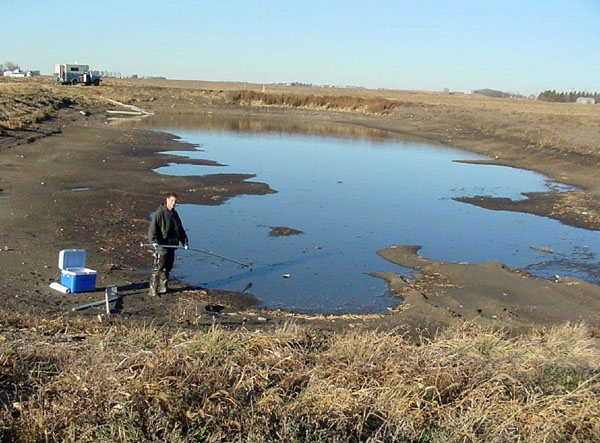
A scientist collecting waste samples from a swine manure holding pond in Iowa

Animal farming is a bigger contributor of greenhouse gases and global warming than transportation is. So says a new report from the United Nations FAO or Food and Agricultural Organization.

Raising livestock accounts for 18% of all green-house gas emissions worldwide, including 9% of all carbon dioxide produced by human activities. Most of that CO2 is from the burning of forests for livestock pastures or to grow feed for farmed animals.

In addition, 37% of all methane due to humans is from livestock. Methane is 23 times more potent as a greenhouse gas, molecule for molecule, than CO2 is.

Farmed animals, says the FAO report, now comprise 20% of all land animals. The proliferation of animals we keep for meat, eggs, and milk is displacing and endangering wildlife species. The report says that 30% of land which is now occupied by livestock was at one time prime wildlife habitat. [It seems to me this figure should be closer to 100%.]

The FAO proposes, as a partial solution, that the true environmental costs inherent in animal agriculture should be passed along to livestock farmers. This would include the cost of attempting to restore habitats damaged by livestock, including the cleaning of rivers polluted by the liquid effluent from waste lagoons. The farmers then would be forced to pass those costs along to retailers and on to consumers. Sounds good to me.

But some costs can't be recouped. There is no technology to remove CO2 from the air, for example. I know this because my community has just had a couple of public hearings to consider our local power company's request to build more coal-fired power plants. That point was brought up again and again as I and others protested the construction: there is no technology to remove CO2 from the air. So the real solution to animal farming will have to be consuming fewer animal products. There is no other true fix.

Science News, January 13, 2007

Keywords:: GREENHOUSE GASES GLOBAL WARMING CLIMATE CHANGE ANIMAL AGRICULTURE FACTORY FARMING ANIMAL PRODUCTS FARMED ANIMALS TRANSPORTATION SUVS CARS TRUCKS EMISSIONS CARBON DIOXIDE BURNING FORESTS BURNING WOODLANDS PASTURES LIVESTOCK FEED ENVIRONMENTAL COSTS CONSUMER LIVESTOCK FARMER TRUE COSTS